Choosing the best home espresso machine comes down to three questions: how much control you want, how many milk drinks you make, and whether you already own a good grinder. We compared ten machines from a $150 starter to a $2,195 dual boiler using manufacturer specifications, manuals, US retailer listings and thousands of owner reviews, so you can match a machine to your routine rather than to a marketing claim.
Caffro is reader-supported. When you buy through links on our site, we may earn an affiliate commission at no extra cost to you. Read our affiliate disclosure.
Quick Verdict: The Best Home Espresso Machines Compared
| Product | Best for | Key spec | Approx. US price | Buy |
|---|---|---|---|---|
| Breville Bambino Plus | Best overall for most kitchens | ThermoJet + PID, auto milk wand | ~$499.95 | Check Price |
| Gaggia Classic Pro | Manual control on a budget | 58 mm, 9-bar OPV, brass boiler | ~$449.76 | Check Price |
| Breville Barista Express | All-in-one with grinder | 16-setting conical grinder, PID | ~$494.95 | Check Price |
| De’Longhi La Specialista Touch | Guided workflow | Bean Adapt, 5-level auto milk wand | ~$599.95 | Check Price |
| De’Longhi Stilosa | Tight budgets | 15-bar pump, stainless boiler | ~$149.95 | Check Price |
| Ninja Luxe Café Premier | Espresso + drip + cold brew | Weight-based dosing, 25 settings | ~$499.00 | Check Price |
| Breville Dual Boiler | Back-to-back milk drinks | Dual boilers, 58 mm, 2-yr warranty | ~$1,599.95 | Check Price |
| Profitec GO | Compact prosumer single boiler | PID, external OPV, gauge | ~$1,199 | Check Price |
| Lelit Mara X V2 | Heat exchanger fans | 1.8 L HX, double-probe PID | ~$1,699 | View |
| Rancilio Silvia Pro X | Premium compact dual boiler | 0.3 L / 1 L boilers, dual PID | ~$2,195 | View |
Approximate US prices and Amazon ratings as of November 2026; prices change often.
How We Researched This: Our 5-Pillar Methodology
How We Researched This
Caffro is a research-based publication. We did not run these machines in a lab; instead every recommendation rests on five documented factors:
- OEM spec & manual verification: heating system, temperature control, portafilter size, tank capacity, dimensions and warranty checked against manufacturer pages, manuals and authorised US retailer listings.
- SCA certification check: the Specialty Coffee Association’s Certified Home Brewer program covers batch (drip) brewers, so none of these espresso machines carries that mark. We note this rather than treat it as a scoring factor.
- Owner-review synthesis: recurring praise and complaints aggregated across Amazon ratings and owner discussion on Reddit (r/espresso, r/Coffee) and Home-Barista.
- Failure-mode & durability audit: repeated failure reports (steam systems, leaks, grinders), parts availability and how repairable each design is.
- 3-year cost of ownership: purchase price plus the grinder you may need, water filtration, descaling supplies and wear parts such as gaskets and shower screens.
Where sources disagreed (for example, published boiler capacities for the Profitec GO, or wattage figures for the Gaggia Classic Pro), we either used the manufacturer figure or left the number out.
1. Breville Bambino Plus (BES500) – Best Overall

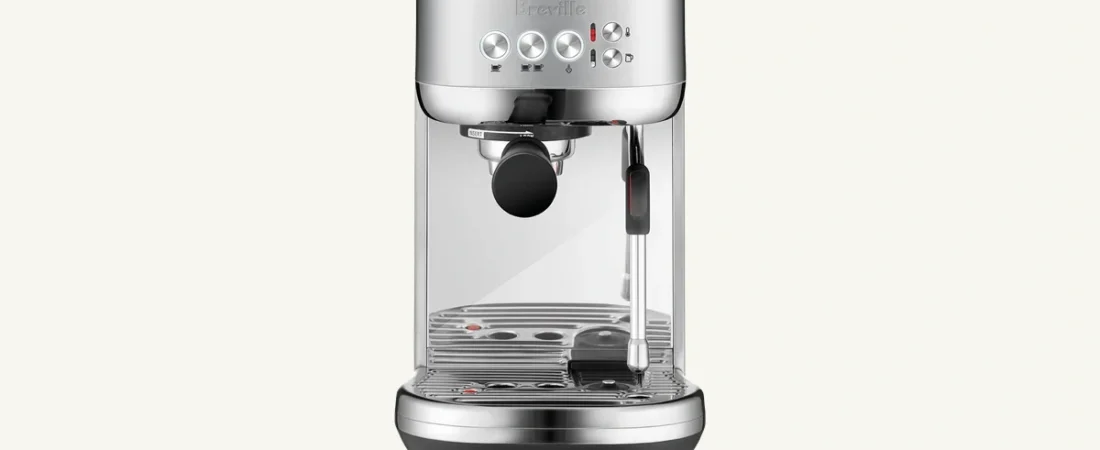
If you want café-style espresso and properly textured milk without learning to manage a boiler, the Bambino Plus is the machine we would point most people to first. It is small, it reaches brewing temperature quickly thanks to Breville’s ThermoJet heater, and it is the only machine on this list with a fully automatic steam wand at around $500. Around $499.95 at the time of writing (Nov 2026), the same price Breville lists directly. For a deeper look, read our Breville Bambino Plus review, or see how it stacks up in Bambino Plus vs. Gaggia Classic Pro.
Engineering Specs & Key Metrics
| Spec | Detail |
|---|---|
| Heating system | ThermoJet heating element |
| Temperature control | Digital PID |
| Portafilter | 54 mm |
| Pump / extraction | 15-bar pump, regulated to about 9 bar at the puck; low-pressure pre-infusion |
| Milk system | Automatic steam wand with adjustable milk temperature and texture |
| Dimensions | 11.9 × 7.4 × 14.3 in (manufacturer) |
| Owner rating | 4.1 out of 5 from 3,063 Amazon ratings (Nov 2026) |
| Approx. US price | $499.95 |
Thermal Architecture & Extraction Analysis
The Bambino Plus has no boiler. Breville’s ThermoJet is a fast-response heating block, and its PID controller holds brew water at a set temperature instead of letting it swing like a simple thermostat. You can switch on and pull a shot within moments, the biggest workflow advantage for weekday mornings.
Extraction is handled by a 15-bar pump that the machine regulates down toward the commonly recommended 9 bar, preceded by a low-pressure pre-infusion stage that gently wets the puck first. The 54 mm portafilter is smaller than the 58 mm commercial standard, so accessory choice is narrower.
The defining feature is the automatic steam wand: set temperature and froth level, and the wand stops itself. Our owner-review synthesis does show a recurring theme, however: a minority of buyers report steam performance degrading or failing over time, and several dislike the forced cleaning-cycle prompts. Descaling on schedule and purging the wand after each use are the main preventive steps owners describe.
What We Liked vs. What We Didn’t
| What we liked | What we didn’t |
|---|---|
| Near-instant heat-up with PID temperature control | 54 mm basket limits third-party accessories |
| Automatic, hands-off milk texturing | Some owners report steam-system failures over time |
| Compact footprint for small kitchens | Mandatory cleaning-cycle prompts annoy some users |
| Pre-infusion makes it forgiving for beginners | Needs a separate, capable espresso grinder |
Who Should NOT Buy This
- The tinkerer who wants pressure gauges, an adjustable OPV and full manual control over every variable.
- The all-in-one buyer who does not already own an espresso-capable burr grinder and wants one box on the counter.
Better fit: Browse our espresso grinder coverage
2. Gaggia Classic Pro (RI9380/46, E24) – Best Value for Manual Control
The Gaggia Classic Pro is the traditional, repairable, commercial-sized option for people who want to learn espresso the old-fashioned way. Around $449.76 on Amazon at the time of writing (Nov 2026); Gaggia North America lists it at $549. One caution before you buy: Gaggia has sold several versions under similar names, and the current “E24” generation uses a brass boiler, while older Evo Pro listings describe an aluminium boiler. Check the model number (RI9380/46) and the boiler material on any listing.
Engineering Specs & Key Metrics
| Spec | Detail |
|---|---|
| Boiler | Single brass boiler, about 3.5 oz (manufacturer) |
| Temperature control | Thermostat (no PID) |
| Pump | 15-bar Ulka-type vibratory pump |
| Over-pressure valve | Set to 9 bar |
| Portafilter | 58 mm commercial standard |
| Water tank | 72 oz |
| Dimensions / weight | 14.2 × 8 × 9.5 in; 19 lb |
| Owner rating | 4.3 out of 5 from 3,229 Amazon ratings (Nov 2026) |
| Approx. US price | $449.76 (Amazon); $549 (Gaggia NA) |
Thermal Architecture & Extraction Analysis
One small brass boiler handles both brewing and steaming, so you brew, flip a switch and wait for steam temperature. Without a PID, thermostats govern the boiler and brew temperature drifts in a cycle; owners manage this with temperature surfing or an aftermarket PID kit. Expect more shot-to-shot variation than the Bambino Plus.
Where the Gaggia earns its reputation is the brew path. The 58 mm group and portafilter take standard commercial baskets and tampers, and the over-pressure valve is set to 9 bar from the factory, which addresses the excessive-pressure complaint common to older units. Its simple internals are widely documented on Reddit and Home-Barista, and spare gaskets, shower screens and solenoid valves are easy to find.
The manual commercial-style wand can produce latte-art microfoam once you learn the technique. Our Gaggia Classic Pro review covers the machine in more depth.
What We Liked vs. What We Didn’t
| What we liked | What we didn’t |
|---|---|
| 58 mm commercial portafilter and baskets | No PID; brew temperature drifts |
| 9-bar OPV from the factory | Wait time when switching from brew to steam |
| Highly repairable with widely available parts | Multiple model versions make listings confusing |
| Large owner community for guides and mods | Steeper learning curve than automatic machines |
Who Should NOT Buy This
- The busy beginner who wants consistent shots with no technique to learn.
- The milk-drink host making several lattes back-to-back who will tire of the brew-then-steam wait.
Better fit: Read our De’Longhi La Specialista Touch research review
3. Breville Barista Express (BES870XL) – Best With a Built-In Grinder
The Barista Express is the most-reviewed machine on this list by a wide margin, and its appeal is simple: it puts a conical burr grinder, a PID-controlled brewer and a manual steam wand into one box for roughly the price of a decent standalone grinder plus an entry machine. Around $494.95 on Amazon at the time of writing (Nov 2026), against a $699.95 list price; Breville lists it at $499.95.
Engineering Specs & Key Metrics
| Spec | Detail |
|---|---|
| Heating system | Thermocoil |
| Temperature control | PID (default brew temperature 200°F, per Breville) |
| Grinder | Integrated conical burr grinder, 16 grind settings |
| Portafilter | 54 mm |
| Pump / extraction | 15-bar pump, about 9 bar at the puck |
| Milk system | Manual steam wand |
| Dimensions | 15.9 × 13.1 × 12.4 in (manufacturer) |
| Owner rating | 4.4 out of 5 from 28,080 Amazon ratings (Nov 2026) |
| Approx. US price | $494.95 (Amazon); $499.95 (Breville) |
Thermal Architecture & Extraction Analysis
A Thermocoil heater with PID control holds a steady brew temperature without the swings of a thermostat-only boiler, and heats faster than a traditional boiler machine.
The integrated grinder is the big reason to buy and also the main limitation. Sixteen grind settings, plus an internal upper-burr adjustment, are enough to dial in most medium and dark roasts. Light-roast drinkers often report running out of range. For someone starting from zero, though, a matched grinder removes the most common beginner mistake.
With nearly 28,000 ratings it has the largest owner data pool here; the main maintenance theme is keeping the grinder chute and burrs clean. Deciding between Breville’s grinder-equipped models? See Barista Express vs. Pro vs. Touch.
What We Liked vs. What We Didn’t
| What we liked | What we didn’t |
|---|---|
| Grinder, brewer and steam wand in one unit | Grinder range limits very light roasts |
| PID temperature control at this price | 54 mm basket, not the 58 mm standard |
| Huge owner base and troubleshooting knowledge | Larger footprint than the Bambino Plus |
| Frequently discounted below list price | Manual wand needs technique for microfoam |
Who Should NOT Buy This
- The light-roast enthusiast who needs fine grind adjustment and a high-end standalone grinder.
- The upgrade-minded hobbyist who knows they will want a separate grinder within a year.
Better fit: Explore more home espresso machines
4. De’Longhi La Specialista Touch (EC9455M) – Best Guided Workflow
The La Specialista Touch is De’Longhi’s attempt to make bean-to-cup manual espresso feel guided rather than intimidating. It pairs an integrated grinder with a touchscreen, an automatic milk wand and a cold-brew function. Around $599.95 on Amazon at the time of writing (Nov 2026), down from a $799.95 list price. We cover it in far more depth in our full La Specialista Touch research review.
Engineering Specs & Key Metrics
| Spec | Detail |
|---|---|
| Grinder | Integrated, 15 grind settings |
| Dosing | Bean Adapt technology; dose up to 20 g |
| Milk system | Automatic steam wand with 5 froth levels and 4 temperatures |
| Extras | Cold brew function |
| Owner rating | 4.2 out of 5 from 282 Amazon ratings (Nov 2026) |
| Approx. US price | $599.95 |
Thermal Architecture & Extraction Analysis
De’Longhi’s Bean Adapt system is designed to guide grind, dose and temperature settings to suit the beans you are using, which shortens dial-in for people who do not want to experiment shot by shot. A dose of up to 20 g puts it in line with modern double-shot recipes, and the touchscreen walks you through each step.
The automatic milk wand is the main draw for latte and cappuccino drinkers: five froth levels and four temperature settings cover everything from flat whites to foamy cappuccinos, without the learning curve of a manual wand. A cold-brew function adds versatility that none of the traditional machines here offer.
The trade-off is a smaller owner data set: a few hundred ratings rather than thousands, so there is less long-term durability evidence than for the Breville machines.
What We Liked vs. What We Didn’t
| What we liked | What we didn’t |
|---|---|
| Guided grind and dose with Bean Adapt | Smaller owner data pool than rivals |
| Automatic milk wand with fine control | Only 15 grind settings |
| Cold-brew function adds versatility | Higher price than the Barista Express |
| Integrated grinder saves counter space | Touchscreen adds electronics to maintain |
Who Should NOT Buy This
- The purist who wants a traditional, highly repairable machine with a commercial portafilter.
- The tight-budget buyer who simply wants espresso under $200.
Better fit: See all espresso machine coverage
5. De’Longhi Stilosa (EC260BK) – Best Budget Pick
The Stilosa is the cheapest real pump-espresso machine we would consider for a first setup. Around $149.95 on Amazon at the time of writing (Nov 2026), it gives you a 15-bar pump, a stainless steel boiler and a manual steam wand. De’Longhi has also released a newer, lower-priced Classic model at around $99.95, which is worth comparing if every dollar counts.
Engineering Specs & Key Metrics
| Spec | Detail |
|---|---|
| Pump | 15-bar |
| Boiler | Stainless steel |
| Milk system | Manual steam wand |
| Owner rating | 4.2 out of 5 from 13,964 Amazon ratings (Nov 2026) |
| Approx. US price | $149.95 |
Thermal Architecture & Extraction Analysis
The Stilosa is an entry-level single-boiler machine with thermostat control: no PID, no pre-infusion profile and no pressure adjustment, so results depend heavily on fresh beans and a good grind. Owners pairing it with a capable grinder report it does better than its price suggests.
The manual steam wand is basic but workable for lattes and cappuccinos. As with any single-boiler machine, you brew first, then switch to steam and wait.
Durability is where owner feedback is most mixed. Our review synthesis found reports of leaks and of units stopping after roughly seven months of use from some buyers. With nearly 14,000 ratings the overall score remains solid, but treat the Stilosa as a low-cost way to find out whether you enjoy making espresso, not as a ten-year investment.
What We Liked vs. What We Didn’t
| What we liked | What we didn’t |
|---|---|
| Very low entry price | No PID or temperature stability features |
| Stainless steel boiler and 15-bar pump | Owner reports of leaks and early failures |
| Compact and simple to operate | Basic steam wand |
| Large owner base | Results depend heavily on your grinder |
Who Should NOT Buy This
- The quality-first buyer who wants consistent, café-level shots every morning.
- The buy-once owner who expects many years of service from one machine.
Better fit: Compare more home espresso machines
6. Ninja Luxe Café Premier (ES601) – Best 3-in-1 Versatility
Ninja’s Luxe Café Premier is built for households where one person drinks espresso, another wants drip coffee and someone else wants cold brew. Around $499.00 on Amazon at the time of writing (Nov 2026), against a $599.99 list price.
Engineering Specs & Key Metrics
| Spec | Detail |
|---|---|
| Grinder | Integrated conical burr, 25 grind settings |
| Dosing | Weight-based dosing |
| Tamping | Assisted tamper |
| Drinks | Espresso, drip coffee and cold brew |
| Water tank | 70 oz |
| Owner rating | 4.2 out of 5 from 2,670 Amazon ratings (Nov 2026) |
| Approx. US price | $499.00 |
Thermal Architecture & Extraction Analysis
The Luxe Café Premier leans heavily on automation. Weight-based dosing means the machine measures the grounds rather than relying on time, which removes one of the most common sources of shot inconsistency. An assisted tamper helps produce a level, even puck, and 25 grind settings give more range than the Barista Express.
Its biggest strength is breadth: drip and cold brew as well as espresso, so it can replace two appliances.
Owner feedback raises durability questions. Our synthesis found complaints of failures at around 15 months and of grinder problems from a subset of buyers.
What We Liked vs. What We Didn’t
| What we liked | What we didn’t |
|---|---|
| Espresso, drip and cold brew in one machine | Owner reports of failures around 15 months |
| Weight-based dosing improves consistency | Some grinder failure complaints |
| Assisted tamping simplifies puck prep | More automation means more parts to fail |
| 25 grind settings | Less appealing to manual-espresso hobbyists |
Who Should NOT Buy This
- The espresso-only drinker who will never use the drip or cold-brew functions.
- The long-term owner who prioritises repairability and decade-long service.
Better fit: Browse super-automatic espresso machines
7. Breville Dual Boiler (BES920XL) – Best Dual Boiler Under $2,000
The Breville Dual Boiler is the step up for people who make several milk drinks in a row and want brewing and steaming to happen at the same time. Around $1,599.95 on Amazon at the time of writing (Nov 2026).
Engineering Specs & Key Metrics
| Spec | Detail |
|---|---|
| Boilers | Dual stainless steel boilers |
| Temperature control | PID |
| Group | Heated group head |
| Portafilter | 58 mm, 22 g basket |
| Pressure | Over-pressure valve (OPV) |
| Power | 1,700 W |
| Water tank | 84 oz |
| Warranty | 2 years |
| Owner rating | 4.2 out of 5 from 389 Amazon ratings (Nov 2026) |
| Approx. US price | $1,599.95 |
Thermal Architecture & Extraction Analysis
With separate boilers for brewing and steaming, the BES920XL removes the wait that defines every single-boiler machine. The brew boiler is PID-controlled, and the heated group head helps keep the brew path at a stable temperature from the first shot.
Unlike Breville’s smaller machines, the Dual Boiler uses a 58 mm portafilter with a 22 g basket, so it accepts the commercial-standard accessory ecosystem. An over-pressure valve caps brew pressure, and the 84 oz tank is the largest on this list.
Owner feedback includes reports of leaks and seal failures. Those are typically serviceable issues, and Breville’s two-year warranty is longer than the one-year cover common at this price, but they are worth factoring into your long-term ownership plan.
What We Liked vs. What We Didn’t
| What we liked | What we didn’t |
|---|---|
| Brew and steam simultaneously | Owner reports of leaks and seal failures |
| 58 mm portafilter with 22 g basket | Big jump in price from entry machines |
| Heated group and PID for temperature stability | Large footprint |
| Two-year warranty | No integrated grinder |
Who Should NOT Buy This
- The straight-espresso drinker who rarely steams milk and does not need two boilers.
- The small-kitchen owner without room for a full-size machine plus grinder.
Better fit: See more espresso machine research
8. Profitec GO – Best Compact Prosumer Single Boiler
The Profitec GO is a German-engineered single-boiler machine aimed at people who prioritise espresso quality and build over milk-drink speed. Around $1,199 at Whole Latte Love at the time of writing (Nov 2026). Profitec has since launched a GO 2.0 at around $1,249, so compare the two versions before buying.
Engineering Specs & Key Metrics
| Spec | Detail |
|---|---|
| Boiler type | Single boiler |
| Temperature control | PID |
| Group | Brass group |
| Pressure | Externally adjustable OPV; pressure gauge |
| Heat-up | About 5–7 minutes (retailer data) |
| Approx. US price | $1,199 (Whole Latte Love) |
Thermal Architecture & Extraction Analysis
The GO pairs a PID-controlled single boiler with a brass group, which gives the stable brew temperatures a thermostat-only machine like the Gaggia cannot match out of the box. A heat-up time of around five to seven minutes is quick for a prosumer machine with a metal group.
Two features stand out for enthusiasts: an over-pressure valve you can adjust externally, without opening the case, and a pressure gauge that shows what is happening during extraction. Together they help you diagnose grind problems.
Published boiler capacities for the GO conflict between sources, so we have left them out. For a head-to-head with Rancilio’s long-running single boiler, see Rancilio Silvia vs. Profitec GO.
What We Liked vs. What We Didn’t
| What we liked | What we didn’t |
|---|---|
| PID temperature control | Single boiler means brew-then-steam wait |
| Externally adjustable OPV | Newer GO 2.0 may be the better buy |
| Pressure gauge for feedback | Conflicting published boiler specs |
| Fast heat-up for a prosumer machine | Sold through specialist retailers, not Amazon |
Who Should NOT Buy This
- The latte-heavy household making several milk drinks in a row.
- The one-touch user who wants automatic milk and guided dosing.
Better fit: Explore home espresso alternatives
9. Lelit Mara X V2 (PL62X) – Best Heat Exchanger
The Mara X V2 is one of the most popular compact E61-style heat exchanger machines among home baristas. Around $1,699 at US specialist retailers at the time of writing (Nov 2026), for example Majesty Coffee.
Engineering Specs & Key Metrics
| Spec | Detail |
|---|---|
| Boiler | 1.8 L heat exchanger, AISI 316L stainless steel |
| Group | E61-type (Lelit L58E) group |
| Temperature control | Double-probe PID; three brew-temperature settings |
| Pump | Vibratory pump designed for quieter operation |
| Water tank | 2.5 L |
| Weight | 18.5 kg (about 40.8 lb) |
| Warranty | 12-month limited manufacturer warranty (US retailer listing) |
| Approx. US price | $1,699 |
Thermal Architecture & Extraction Analysis
A heat exchanger machine keeps a single large boiler at steam temperature and routes fresh brew water through a tube inside it, so you can brew and steam at the same time. The traditional weakness is overheated brew water, which owners correct with a cooling flush. Lelit’s answer is a double-probe temperature control system that monitors both the boiler and the heat exchanger and adjusts heating to keep brew temperature in range.
A switch behind the drip tray selects warm, hot or extra-hot brew settings (roughly 197–199°F, 200–202°F and 203–205°F according to retailer documentation), and a mode switch lets you prioritise brewing or steaming. The E61-style group gives the familiar lever operation and commercial 58 mm basket compatibility, and the machine includes brew and steam pressure gauges.
Lelit designed the vibratory pump to run quieter than typical E61 machines, and an eco mode drops to standby after 30 minutes idle. Retailers recommend softened water to prevent limescale.
What We Liked vs. What We Didn’t
| What we liked | What we didn’t |
|---|---|
| Brew and steam at the same time | Long warm-up typical of E61 groups |
| Double-probe temperature control reduces cooling flushes | Heavy at 18.5 kg |
| Quieter pump than typical E61 machines | Sold through specialist retailers |
| Commercial 58 mm group with pressure gauges | Requires soft water to protect the boiler |
Who Should NOT Buy This
- The quick-start user who wants espresso within minutes of switching on.
- The hands-off buyer who wants integrated grinding and automatic milk.
Better fit: See the best espresso machines under $1,000
10. Rancilio Silvia Pro X – Best Premium Compact Dual Boiler
The Silvia Pro X builds on Rancilio’s long-running Silvia with two boilers, two PID controllers and a programmable soft infusion. Around $2,195 at US specialist retailers at the time of writing (Nov 2026), for example Espresso Outlet.
Engineering Specs & Key Metrics
| Spec | Detail |
|---|---|
| Boilers | Dual: 0.3 L coffee boiler, 1 L steam boiler |
| Temperature control | Two PID controllers |
| Group / portafilter | 58 mm brass brew group; baskets up to 21 g |
| Pumps | Two vibratory pumps |
| Pre-infusion | Programmable soft infusion, up to 6 seconds |
| Extras | Shot timer, brew-pressure gauge, power-on timer |
| Water tank | 2 L built-in reservoir (not plumbable) |
| Dimensions / weight | 9.8 W × 16.5 D × 15.3 H in; 44.1 lb |
| Power (North America) | 120 V, 950–1,000 W |
| Approx. US price | $2,195 |
Thermal Architecture & Extraction Analysis
The Pro X uses a small 0.3 L coffee boiler and a 1 L steam boiler, each with its own PID controller, so brew and steam temperatures are set independently and both can run at once. Two vibratory pumps feed the system, and the 58 mm brass group accepts commercial baskets.
Rancilio’s soft infusion applies a gentle flow of water for up to six seconds before full pressure. It can help wet the puck evenly and reduce channeling, though retailers are careful to note it is not the same as full manual pressure profiling. A shot timer and a brew-pressure gauge give useful feedback for dialing in.
At 9.8 inches wide it suits kitchens that want dual-boiler convenience without a full-size E61 footprint. It is reservoir-only and cannot be plumbed in.
What We Liked vs. What We Didn’t
| What we liked | What we didn’t |
|---|---|
| Independent PIDs for brew and steam | Highest price on this list |
| Compact width for a dual boiler | Cannot be direct plumbed |
| Programmable soft infusion and shot timer | Vibratory rather than rotary pumps |
| 58 mm brass group and commercial baskets | Heavy at 44.1 lb |
Who Should NOT Buy This
- The first-time buyer still deciding whether espresso is a long-term hobby.
- The plumb-in planner who wants a rotary-pump, direct-connect machine.
Better fit: See the best espresso machines under $500
Comprehensive Buyer’s Guide & Decision Matrix
Every machine above makes espresso; what separates them is how they heat water, how stable that temperature is, and how much of the process they automate. If you already know your budget, our guides to the best espresso machines under $1,000, best prosumer espresso machines and best luxury espresso machines go deeper at each price tier.
| If you… | Look at | Why |
|---|---|---|
| Mostly drink lattes and want it easy | Bambino Plus, La Specialista Touch | Automatic milk wands remove the steaming learning curve |
| Have no grinder yet | Barista Express, La Specialista Touch, Ninja Luxe Café | Integrated grinders save money and counter space |
| Want to learn manual espresso | Gaggia Classic Pro, Profitec GO | 58 mm or prosumer brew paths with room to grow |
| Make several milk drinks in a row | Breville Dual Boiler, Mara X V2, Silvia Pro X | Brew and steam at the same time |
| Have under $200 | De’Longhi Stilosa | Lowest-cost pump machine with a steam wand |
| Also want drip and cold brew | Ninja Luxe Café Premier | Three brew styles in one appliance |
Primary Feature Evaluation Metrics
Heating architecture. Thermoblock-style heaters (ThermoJet, Thermocoil) heat fast and suit people who want espresso within minutes. Single boilers are simple and repairable but force a wait between brewing and steaming. Heat exchangers and dual boilers let you brew and steam together, at the cost of size, price and warm-up time. Our single boiler vs. dual boiler vs. heat exchanger guide explains the trade-offs in detail.
Temperature control. A PID controller holds brew temperature steady instead of letting it cycle around a thermostat set point. It is the single most useful feature for consistent shots, which is why every machine above about $450 on this list has one except the Gaggia Classic Pro.
Portafilter size. The 58 mm standard opens up the widest range of baskets, tampers and puck-prep tools. Breville’s 54 mm machines work well, but accessory choice is narrower.
Pressure control. Home pumps are usually rated at 15 bar, but extraction typically targets around 9 bar; an OPV and a pressure gauge help you control it.
Milk system. Automatic wands trade control for convenience; manual wands reward practice with better latte-art texture. Steam power and the ability to steam while brewing matter most for households making several drinks.
Grinder. The grinder matters as much as the machine. If you choose a machine without one, budget for an espresso-capable burr grinder; a blade grinder or stale pre-ground coffee will limit any machine on this list.
Maintenance & Longevity Factors
Water quality. Scale is the most common enemy of espresso machines. Use filtered or softened water, replace any in-tank filters on schedule, and descale according to the manual. Boiler machines are especially sensitive.
Daily and weekly cleaning. Purge and wipe the steam wand after every drink, rinse the group, and backflush machines that support it. Integrated grinders need their chutes and burrs brushed out regularly.
Repairability and parts. Simple, widely owned designs such as the Gaggia Classic Pro have abundant spare parts and repair guides. Highly automated machines have more electronics that may need service.
Warranty. Breville lists two years on the Dual Boiler; many specialist-machine listings we read showed one year. Buying from an authorised dealer matters for warranty support.
Frequently Asked Questions
What is the best home espresso machine for beginners?
For most beginners we recommend the Breville Bambino Plus. It heats quickly, uses PID temperature control, has a forgiving pre-infusion stage and an automatic milk wand. If you do not own an espresso grinder, the Breville Barista Express includes one.
Do I need a separate grinder for a home espresso machine?
Yes, unless the machine has one built in. Espresso needs a fine, consistent grind, which requires a burr grinder designed for espresso. The Barista Express, La Specialista Touch and Ninja Luxe Café Premier include grinders; the other machines here do not.
Is a dual boiler espresso machine worth it?
It is worth it if you regularly make several milk drinks in a row, because you can brew and steam at the same time. For mostly straight espresso or one latte a day, a single-boiler or thermoblock machine is usually enough.
What does PID mean on an espresso machine?
PID stands for proportional-integral-derivative, a type of electronic controller that holds water at a set temperature more precisely than a basic thermostat. Stable brew temperature makes shots more consistent from one cup to the next.
How much should I spend on a home espresso machine?
Around $150 buys a basic pump machine; $450–$600 adds PID control or an integrated grinder; $1,200–$2,200 buys prosumer heat exchangers and dual boilers. Budget for a grinder if your machine lacks one.
Editorial Research Disclosure
Research disclosure: This article is based on manufacturer specifications, published manuals, retailer data and aggregated owner feedback. Caffro did not perform hands-on lab testing of these products.
About the Caffro Research Team: Caffro’s researchers analyse coffee equipment by verifying manufacturer specs and manuals, reading retailer listings and synthesising owner reviews across Amazon, Reddit and Home-Barista. We update guides as prices, models and owner data change. Learn more about Caffro.