The best espresso machine under $500 is the one that gets the fundamentals right: a pump that brews at roughly 9 bar rather than whatever number is printed on the box, a heating system that holds temperature from one shot to the next, a basket you can actually dial in with freshly ground coffee, and a steam wand that can texture milk properly. Between $200 and $500 those fundamentals finally become available.
This guide focuses only on that $200 to $500 band. We compared seven current machines sold in the US by reading manufacturer specification pages and manuals, checking live Amazon.com listings in November 2026, and reading through owner ratings and review themes. Every price, spec and rating below comes from a page we opened; anything we couldn’t confirm was left out. If your budget is smaller, start with our guide to the best espresso machines under $200; if you want the full price range, from entry level to dual boilers, see our master list of the best home espresso machines.
Quick Verdict: The Best Espresso Machines Under $500 at a Glance
Prices are approximate Amazon.com prices at the time of writing (November 2026), during holiday sales. They move quickly, so check the live price before you buy.
| Product | Best for | Key spec | Approx. US price | Buy |
|---|---|---|---|---|
| Gaggia Classic Pro E24 | Best overall for true 9-bar espresso | 9-bar OPV, 58 mm portafilter, brass boiler | ~$449.76 | Check Price |
| Breville Bambino Plus | Best for milk drinks | ThermoJet + PID, auto steam wand, 3 temps & 3 textures | ~$499.95 | Check Price |
| Breville Bambino | Best value | ThermoJet + PID, 9-bar extraction, manual wand | ~$299.95 | Check Price |
| Breville Barista Express BES870XL | Best with a built-in grinder | 16-setting conical grinder, PID, 67 oz tank | ~$494.95 | Check Price |
| De’Longhi La Specialista Arte Evo | Best grinder machine with temperature settings | 15 grind settings, 3 temps, 9-bar extraction | ~$449.95 | Check Price |
| Ninja Luxe Café Premier ES601 | Most guided workflow | 25-setting grinder, weight-based dosing, 70 oz tank | ~$499.00 | Check Price |
| De’Longhi Dedica EC685 | Best for narrow counters | 6-inch-wide Thermoblock, 15-bar pump | ~$229.99 | Check Price |
How We Researched This: Our 5-Pillar Method
How We Researched This
We evaluated every machine in this guide against the same five factors, using published data rather than our own measurements:
- OEM spec & manual verification: heating system, published heat-up time, extraction pressure, basket types and steam wand, from manufacturer pages, cross-checked against Amazon.com. Where they disagree, we use the manufacturer figure and say so.
- SCA certification check: the SCA Certified Home Brewer program covers drip brewers, not espresso machines, so it did not affect this ranking.
- Owner-review synthesis across Amazon, Reddit and Home-Barista: for this guide we read the star ratings, review counts and summarized review themes on each live Amazon.com listing (November 2026). Owner communities such as r/espresso and Home-Barista shape the failure points we look for, but we only cite figures we read ourselves.
- Failure-mode & durability audit: common failure points, serviceability, parts availability and published warranty.
- 3-year cost of ownership: purchase price plus a grinder where needed, descaler, gaskets and missing accessories.
We don’t assign numeric scores or report figures the manufacturer hasn’t published.
What “True 9-Bar” Means in This Guide
Most machines here advertise a 15-bar pump, which is the pump’s maximum, not the pressure your coffee sees. Espresso is traditionally extracted at around 9 bar, and the better machines get there in one of two ways. The Gaggia Classic Pro E24 uses an over-pressure valve (OPV) that Gaggia North America lists as calibrated to 9 bar, which bleeds off any excess pump pressure. Breville and De’Longhi instead state that their machines deliver a 9-bar extraction from a 15-bar pump, typically after a low-pressure pre-infusion stage.
The second dividing line is the basket. Pressurized (dual-wall) baskets create resistance artificially so pre-ground coffee still produces a crema-like layer. Unpressurized (single-wall) baskets rely on your grind and tamp to create resistance, which is what lets you actually dial in a shot. Most machines below ship with single-wall baskets; the Ninja uses guided dosing instead.
1. Gaggia Classic Pro E24: Best Overall for True 9-Bar Espresso

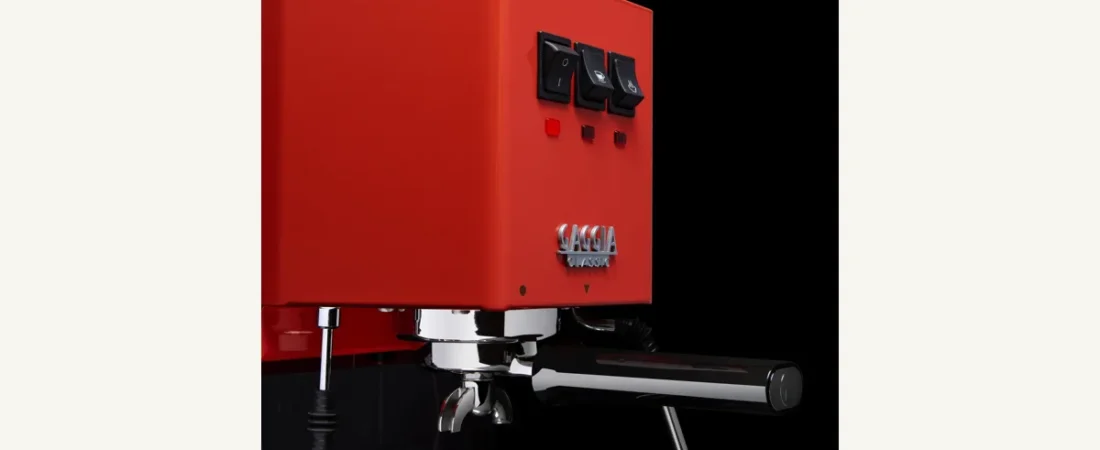
If the goal is espresso the way a café machine makes it, the Gaggia Classic Pro E24 is the most direct route under $500. It was around $449.76 on Amazon.com at the time of writing, while Gaggia North America lists the stainless steel version at $549.00 on its own store, so the Amazon price represents a real saving. It holds 4.3 stars from 3,229 ratings on Amazon. (Amazon lists it as RI9380/46 E24.) Our full Gaggia Classic Pro review goes deeper on this machine.
Engineering Specs & Key Metrics
| Spec | Gaggia Classic Pro E24 |
|---|---|
| Heating system | Single lead-free brass boiler (single-boiler/dual-use), 3.5 oz, 1,370 W embedded heater |
| Pump / pressure | 15-bar Italian-made Ulka pump; OPV calibrated to 9 bar |
| Portafilter | 58 mm stainless steel, commercial style |
| Baskets | Commercial single and double baskets plus a pressurized basket for pre-ground coffee or ESE pods |
| Steam wand | Commercial-style stainless wand, 2-hole tip, rotating, 3.75 in usable length |
| Water reservoir | 72 oz |
| Power | 1,425 W, 110–120 V |
| Size / weight | 14.2 × 8 × 9.5 in (H × W × D), 19 lb |
| Amazon rating (Nov 2026) | 4.3 / 5 from 3,229 ratings |
| Approx. price | ~$449.76 (Amazon); $549.00 at Gaggia North America |
Thermal Architecture & Extraction Analysis
The Classic Pro E24 is the only machine here built around a traditional boiler and an OPV. Gaggia says the E24’s solid lead-free brass boiler improves thermal stability and steaming, and the brass boiler and group carry more thermal mass than instant-heat systems. The trade-off is time: you switch it on and let it warm through.
Pressure is where it stands apart. With the OPV calibrated to 9 bar, excess pump pressure is diverted rather than pushed through the puck. Combined with the commercial unpressurized baskets, that makes the Gaggia the most honest machine here for learning to dial in. Gaggia doesn’t list PID temperature control for this model, so brew temperature is governed by the boiler’s own regulation rather than a digital controller.
Steaming is traditional too: brew first, flip the steam switch, wait for the boiler to heat, then steam with the two-hole commercial wand.
What We Liked vs. What We Didn’t
Pros
- OPV calibrated to 9 bar: the clearest “true 9-bar” design under $500
- 58 mm commercial portafilter and unpressurized baskets for genuine dial-in
- Brass boiler and group, three-way solenoid, 17-gauge stainless body
- Common parts such as the group gasket ($9.95) are sold directly by Gaggia North America
Cons
- No PID listed: temperature consistency depends more on your routine
- Single boiler means waiting between brewing and steaming
- Needs a capable espresso grinder to get the most from it
- No volumetric shot buttons; you stop the shot yourself
Who Should NOT Buy the Gaggia Classic Pro E24
- The latte-first household making several milk drinks back to back: the brew-then-steam wait on a single boiler slows you down. The Bambino Plus below automates milk and switches modes faster.
- The no-grinder buyer who plans to use pre-ground coffee long term: you’d be using the pressurized basket and leaving the machine’s main advantage on the table. Consider the Barista Express, which has a grinder built in.
Better fit: weigh the trade-offs in our Breville Bambino Plus vs. Gaggia Classic Pro comparison, or see the Barista Express below if you want a grinder built in.
2. Breville Bambino Plus: Best for Milk Drinks
The Bambino Plus is the machine to buy if most of what you drink has milk in it. Breville lists it at $499.95 on its US site, and Amazon.com had it at the same $499.95 at the time of writing, with 4.1 stars from 3,063 ratings. Our Breville Bambino Plus review covers it in more depth.
Engineering Specs & Key Metrics
| Spec | Breville Bambino Plus BES500 |
|---|---|
| Heating system | ThermoJet with digital PID temperature control |
| Published heat-up | Ready in 3 seconds (Breville) |
| Pressure | Low-pressure pre-infusion, then 9-bar extraction from a 15-bar Italian pump |
| Portafilter / dose | 54 mm stainless steel, 18 g dose (Breville; the Amazon listing says 19 g) |
| Baskets | 1- and 2-cup single-wall and dual-wall baskets |
| Steam wand | Automatic wand with 3 milk temperatures and 3 texture levels, plus manual mode; auto purge after steaming |
| Power | 1,560 W |
| Size | 11.9 × 7.4 × 14.3 in (W × D × H) |
| Warranty | 2-year limited (per Amazon listing) |
| Amazon rating (Nov 2026) | 4.1 / 5 from 3,063 ratings |
| Approx. price | ~$499.95 |
Thermal Architecture & Extraction Analysis
Breville’s ThermoJet is a fast-response heater with a published 3-second heat-up. A PID regulates brew temperature, and after steaming the machine purges itself so the next shot isn’t brewed too hot, so you can steam and brew again with almost no waiting.
Extraction is low-pressure pre-infusion followed by 9 bar. Both single-wall and dual-wall baskets are included, so you can start with pre-ground coffee and move to single-wall baskets once you own a good grinder.
The automatic steam wand is the headline: choose one of three milk temperatures and three texture levels and the wand textures the milk for you, or steam manually.
What We Liked vs. What We Didn’t
Pros
- Automatic milk texturing with adjustable temperature and texture
- 3-second published heat-up and auto purge make back-to-back drinks quick
- PID temperature control and 9-bar extraction
Cons
- Sits at the very top of the $500 budget with no grinder included
- Amazon’s review summary notes some owners reporting steam failures and frustration with the forced cleaning cycle
- 54 mm accessories are less universal than 58 mm
Who Should NOT Buy the Breville Bambino Plus
- The straight-espresso drinker who rarely uses milk: you’d be paying around $200 extra for the automatic wand. The standard Bambino below has the same core brewing system.
- The buyer without a grinder who doesn’t want to buy one separately: the Barista Express or La Specialista Arte Evo include one at a similar price.
Better fit: compare more options in our home espresso section.
3. Breville Bambino: Best Value
The standard Bambino is the clearest value in this band. At $299.95 on both Amazon.com and Breville’s US site at the time of writing, it delivers the same ThermoJet heating, PID control and 9-bar extraction as the Bambino Plus for $200 less. It holds 4.0 stars from 2,746 Amazon ratings. What you give up is the automatic milk system.
Engineering Specs & Key Metrics
| Spec | Breville Bambino BES450 |
|---|---|
| Heating system | ThermoJet with digital PID temperature control |
| Published heat-up | Ready in 3 seconds (Breville) |
| Pressure | Low-pressure pre-infusion, then 9-bar extraction from a 15-bar Italian pump |
| Portafilter / dose | 54 mm, 18 g dose (Breville; the Amazon listing says 19 g) |
| Baskets | 1- and 2-cup single-wall and dual-wall baskets |
| Steam wand | Manual steam wand |
| Controls | One-touch 1 and 2 shot volumetric control, steam, hot water |
| Power | 1,560 W |
| Size | 11.9 × 6.1 × 13.5 in (W × D × H, Breville) |
| Warranty | 1-year limited (per Amazon listing) |
| Amazon rating (Nov 2026) | 4.0 / 5 from 2,746 ratings |
| Approx. price | ~$299.95 |
Thermal Architecture & Extraction Analysis
On the brewing side, Breville describes the Bambino identically to the Bambino Plus: ThermoJet, PID, low-pressure pre-infusion, 9-bar extraction and the same 54 mm baskets. The difference is how you make milk.
The steam wand is manual, so latte art is possible but takes practice. One source conflict: an Amazon listing bullet describes an automatic wand, while Breville’s page and the listing description say manual. We’ve gone with Breville.
It also has a hot-water button for Americanos, and the $200 saved over the Plus goes a long way toward a grinder.
What We Liked vs. What We Didn’t
Pros
- Same ThermoJet, PID and 9-bar extraction as the Bambino Plus for $200 less
- 3-second published heat-up
- Single-wall baskets included for real dial-in
Cons
- Manual steam wand has a learning curve
- 1-year warranty versus the Plus’s 2 years
- Amazon’s review summary includes owners reporting units that stopped working within months
Who Should NOT Buy the Breville Bambino
- The hands-off latte maker who doesn’t want to learn milk steaming: the Bambino Plus automates it.
- The buyer who wants the absolute lowest price: if $300 is a stretch, our under-$200 picks cover cheaper machines with honest trade-offs.
Better fit: see our guide to the best espresso machines under $200, linked in the introduction.
4. Breville Barista Express BES870XL: Best with a Built-In Grinder
The Barista Express is the most widely owned machine in this guide by a large margin: 4.4 stars from 28,083 ratings on Amazon.com, where it was around $494.95 at the time of writing (list price $699.95). It solves the biggest hidden cost of espresso, the grinder, by building one in.
Engineering Specs & Key Metrics
| Spec | Breville Barista Express BES870XL |
|---|---|
| Heating system | Thermocoil with digital PID temperature control |
| Pressure | Low-pressure pre-infusion |
| Grinder | Integrated conical burr grinder, 16 grind settings, 1/2 lb bean hopper |
| Portafilter | 54 mm stainless steel |
| Baskets | 1- and 2-cup single-wall and dual-wall baskets |
| Steam wand | Manual steam wand |
| Water tank | 67 oz |
| Power | 1,600 W, 120 V |
| Size | 13.8 × 12.5 × 15.9 in (D × W × H) |
| Warranty | 1-year limited |
| Amazon rating (Nov 2026) | 4.4 / 5 from 28,083 ratings |
| Approx. price | ~$494.95 (list $699.95) |
Thermal Architecture & Extraction Analysis
The Barista Express uses an older Thermocoil heater rather than ThermoJet, with PID temperature control and low-pressure pre-infusion.
The value lies in the 16-setting conical burr grinder, which doses straight into the portafilter so you can use single-wall baskets with fresh beans from day one. The trade-off: a built-in grinder can’t be upgraded separately, and Amazon’s review summary lists grinder failures and machines stopping after around 15 months among its negative themes.
What We Liked vs. What We Didn’t
Pros
- Built-in conical burr grinder with 16 settings
- PID temperature control and low-pressure pre-infusion
- Large 67 oz tank and a full accessory kit
Cons
- Grinder can’t be upgraded separately
- Some owners report grinder or machine failures after the first year
- Taller footprint than the compact machines here
Who Should NOT Buy the Breville Barista Express
- The future upgrader who expects to want a better grinder in a year or two: you’ll be stuck with the built-in one. A Bambino plus a separate grinder is more modular.
- The small-kitchen owner: at nearly 16 inches tall with a hopper on top, it needs clearance under cabinets.
Better fit: compare Breville’s grinder machines in our Barista Express vs. Pro vs. Touch comparison, or pair a Bambino with one of our standalone espresso grinders.
5. De’Longhi La Specialista Arte Evo: Best Grinder Machine with Temperature Settings
De’Longhi’s La Specialista Arte Evo is the newest machine here and the main alternative to the Barista Express. It was around $449.95 on Amazon.com at the time of writing (list $699.95), with 4.6 stars from just 73 ratings, a small sample that reflects how recently it launched.
Engineering Specs & Key Metrics
| Spec | De’Longhi La Specialista Arte Evo |
|---|---|
| Grinder | Built-in conical burr grinder, 15 grind settings |
| Pressure | 15-bar Italian pump delivering 9-bar extraction (De’Longhi) |
| Temperature | Active Temperature Control with 3 settings |
| Steam wand | Commercial-style steam wand |
| Presets | Espresso, Americano, cold brew, hot water |
| Cold brew | Cold Extraction Technology, under 5 minutes (De’Longhi) |
| Water tank | 56 fl oz |
| Power | 1,600 W |
| Size | 14.4 × 11.2 × 15.9 in (D × W × H) |
| Included | Tamper, dosing funnel, tamping mat |
| Amazon rating (Nov 2026) | 4.6 / 5 from 73 ratings |
| Approx. price | ~$449.95 (list $699.95) |
Thermal Architecture & Extraction Analysis
De’Longhi is explicit that the Arte Evo uses a 15-bar pump to deliver an optimal 9-bar extraction, and it adds three selectable brew temperatures through Active Temperature Control. That’s a genuinely useful variable that the Barista Express doesn’t expose: lighter roasts often extract better a little hotter, darker roasts a little cooler.
The Arte Evo also includes De’Longhi’s Cold Extraction Technology, which the company says produces cold brew in under five minutes and was developed with the Specialty Coffee Association. Note that this is a collaboration on a brewing method, not SCA certification of the machine. The touchscreen step up is covered in our De’Longhi La Specialista Touch review.
What We Liked vs. What We Didn’t
Pros
- Built-in grinder plus three brew-temperature settings
- Clearly stated 9-bar extraction
- Dosing funnel and tamping mat included
Cons
- Very small review pool so far (73 ratings)
- 15 grind settings, one fewer than the Barista Express
- Smaller 56 fl oz tank than the Barista Express or Ninja
Who Should NOT Buy the De’Longhi La Specialista Arte Evo
- The cautious buyer who wants years of owner history before committing: the Barista Express has tens of thousands of ratings behind it.
- The milk-automation seeker: De’Longhi lists no automatic milk presets on this model, so the Bambino Plus or Ninja suit you better.
Better fit: browse all espresso machine guides.
6. Ninja Luxe Café Premier ES601: Most Guided Workflow
The Ninja Luxe Café Premier is for people who want café drinks without learning to be a barista. It was $499.00 on Amazon.com at the time of writing (list $599.99), with 4.2 stars from 2,673 ratings. It’s also the only machine here that brews drip coffee and cold brew alongside espresso.
Engineering Specs & Key Metrics
| Spec | Ninja Luxe Café Premier ES601 |
|---|---|
| Grinder | Built-in conical burr grinder, 25 settings |
| Dosing / tamping | Weight-based automatic dosing; spring-loaded assisted tamper |
| Brew guidance | Barista Assist Technology with real-time temperature and pressure adjustments |
| Baskets | Double basket and Luxe basket |
| Milk | Dual Froth System (whisk + steamer), 4 presets or manual frothing |
| Drinks | Double or quad espresso, 3 drip styles, cold-pressed espresso, cold brew |
| Water reservoir | 70 oz, removable |
| Size | 12.99 × 13.39 × 14.57 in (D × W × H) |
| Amazon rating (Nov 2026) | 4.2 / 5 from 2,673 ratings |
| Approx. price | ~$499.00 (list $599.99) |
Thermal Architecture & Extraction Analysis
Ninja takes a different approach: Barista Assist Technology recommends grind settings, doses by weight, and adjusts temperature and pressure for the drink you select, while the assisted tamper removes another variable.
What you give up is transparency: the listing names neither a heating system nor an extraction pressure, so we can’t describe it in true 9-bar terms. Amazon’s review summary also notes customers reporting breakdowns after around 15 months and some grinder or frother problems.
What We Liked vs. What We Didn’t
Pros
- Weight-based dosing and assisted tamping remove guesswork
- Hands-free milk frothing, including cold foam
- Espresso, drip and cold brew in one machine
Cons
- Ninja doesn’t publish its heating system or extraction pressure
- Durability complaints around the 15-month mark in owner reviews
- Less room to grow if you later want full manual control
Who Should NOT Buy the Ninja Luxe Café Premier
- The espresso hobbyist who wants to control grind, dose and pressure directly: the Gaggia or Bambino give you that control.
- The long-term-reliability buyer: owner reports of failures after the first year make a simpler machine with readily available parts a safer bet.
Better fit: a super-automatic machine if you want fully hands-off drinks.
7. De’Longhi Dedica EC685: Best for Narrow Counters
The Dedica is the slimmest, least expensive machine here. It was around $229.99 on Amazon.com at the time of writing, with 4.0 stars from 4,887 ratings. De’Longhi describes it as its slimmest espresso machine, at about 6 inches wide.
Engineering Specs & Key Metrics
| Spec | De’Longhi Dedica EC685 |
|---|---|
| Heating system | Thermoblock |
| Published heat-up | About 40 seconds to brewing temperature (De’Longhi) |
| Pump | 15-bar |
| Filter holder | 3-in-1: single shot, double shot, and ESE pods |
| Steam wand | Manual frother (Advanced Cappuccino System) |
| Controls | Illuminated buttons; 1 or 2 shot flow stop |
| Cup clearance | Up to 5 in |
| Size | 13 × 5.9 × 12 in (D × W × H) |
| Amazon rating (Nov 2026) | 4.0 / 5 from 4,887 ratings |
| Approx. price | ~$229.99 |
Thermal Architecture & Extraction Analysis
The Dedica heats with a Thermoblock and De’Longhi publishes a 40-second heat-up, quicker than a boiler machine but slower than Breville’s 3-second ThermoJet. Its 3-in-1 filter holder accepts ground coffee for single or double shots and ESE pods, which makes it forgiving for people still using pre-ground coffee. De’Longhi’s listing talks about 15-bar pressure rather than a regulated 9-bar extraction, and the filter holder favors convenience over dial-in.
It ranks last, but if your counter can only spare six inches, nothing else here fits. De’Longhi also sells the newer Dedica Maestro Plus (about $237.45 on Amazon when we checked) with an automatic steam wand.
What We Liked vs. What We Didn’t
Pros
- About 6 inches wide, the slimmest machine here
- 40-second published heat-up
- Accepts ground coffee and ESE pods
Cons
- No stated 9-bar regulation
- Less suited to dialing in fresh, finely ground coffee
- Amazon’s review summary includes reports of pump failures and units breaking within the first year
Who Should NOT Buy the De’Longhi Dedica EC685
- The aspiring home barista who wants to dial in with a grinder: the Bambino gives you PID, 9-bar extraction and single-wall baskets for around $70 more.
- The budget-first buyer who doesn’t need the slim design: our under-$200 guide covers cheaper machines with pressure gauges.
Better fit: our under-$200 espresso machine guide, linked in the introduction.
Comprehensive Buyer’s Guide & Decision Matrix
Under $500 you’re choosing between a boiler machine with a 9-bar OPV (Gaggia), a fast-heating PID machine paired with your own grinder (Bambinos), or an all-in-one with a grinder built in (Barista Express, Arte Evo, Ninja).
Decision Matrix: Which One Fits You?
| If you… | Choose | Why |
|---|---|---|
| Want café-style espresso and are willing to learn | Gaggia Classic Pro E24 | 9-bar OPV, 58 mm commercial baskets |
| Drink lattes and cappuccinos most days | Breville Bambino Plus | Automatic milk with 3 temps and 3 textures |
| Want the best brewing per dollar | Breville Bambino | PID and 9-bar extraction for ~$300 |
| Don’t own a grinder and want a proven all-in-one | Breville Barista Express | 16-setting grinder, 28,000+ ratings |
| Want a grinder plus temperature control | De’Longhi La Specialista Arte Evo | 15 grind settings, 3 temperatures |
| Want the machine to guide every step | Ninja Luxe Café Premier | Weight-based dosing, assisted tamping |
| Have very little counter space | De’Longhi Dedica EC685 | About 6 inches wide |
Primary Feature Evaluation Metrics
Extraction pressure: Look for a machine that regulates to around 9 bar, either with an OPV like the Gaggia or a stated 9-bar extraction like the Breville and De’Longhi La Specialista models. A bigger pump number on the box is not an upgrade.
Heating system and heat-up: Boilers (Gaggia) carry more thermal mass but need a warm-up. ThermoJet (3 seconds published) and Thermoblock (about 40 seconds on the Dedica) are ready quickly.
Temperature control: A PID (Bambino range, Barista Express) or selectable temperatures (Arte Evo) improves shot-to-shot consistency and lets you adjust for roast level. The Gaggia doesn’t list a PID, so it rewards a consistent warm-up and flushing routine.
Basket type: Single-wall baskets are essential for dialing in fresh coffee. The Gaggia, both Bambinos and the Barista Express include them; Breville also includes dual-wall baskets for pre-ground coffee, and Gaggia includes a pressurized basket for the same purpose.
Portafilter and steam wand: 58 mm (Gaggia) has the widest accessory choice; 54 mm (Breville) is well supported. The Bambino Plus and Ninja automate milk; the others need practice.
Maintenance & Longevity Factors
- Descale on schedule, more often with hard water.
- Rinse the portafilter and wipe the shower screen after each session.
- Replace gaskets. Water leaking around the portafilter usually means a worn group gasket. Gaggia North America sells the Classic’s gasket directly for $9.95.
- Keep grinders clean. On the Barista Express, Arte Evo and Ninja, clear the burrs and chute regularly.
- Register the warranty. Terms vary: Breville lists 2 years on the Bambino Plus and 1 year on the Bambino and Barista Express on their Amazon listings.
The Real 3-Year Cost of Ownership
For machines without a grinder (Gaggia, Bambino, Bambino Plus, Dedica), budget for a dedicated espresso burr grinder; it often matters as much as the machine. On a tighter budget, see our best manual coffee grinders. Grinder machines (Barista Express, Arte Evo, Ninja) skip that cost but tie you to the built-in burrs.
- Fresh coffee: the single biggest variable in the cup.
- A 0.1 g scale for weighing doses and shots.
- Descaler, cleaning tablets and gaskets over the life of the machine.
- A milk pitcher and tamper if not included (the Gaggia ships with a plastic tamper; Breville includes a milk jug with the Bambino models).
Frequently Asked Questions
What is the best espresso machine under $500?
Our overall pick is the Gaggia Classic Pro E24 (around $449.76 at the time of writing), with a 9-bar OPV and 58 mm commercial portafilter. For mostly milk drinks, the Breville Bambino Plus ($499.95) is the better choice thanks to its automatic steam wand.
Is a 15-bar espresso machine better than a 9-bar machine?
No. Espresso is traditionally extracted at around 9 bar, and a 15-bar rating describes the pump’s maximum. The better machines use a 15-bar pump but regulate extraction to about 9 bar, either with an over-pressure valve, as on the Gaggia Classic Pro E24, or by design, as Breville and De’Longhi state for the Bambino range and La Specialista Arte Evo.
Do I need a separate grinder for an espresso machine under $500?
For the Gaggia Classic Pro E24, Breville Bambino, Bambino Plus and De’Longhi Dedica, yes, if you want to use unpressurized baskets with fresh beans. The Breville Barista Express, De’Longhi La Specialista Arte Evo and Ninja Luxe Café Premier have grinders built in.
Which espresso machine under $500 heats up fastest?
Breville publishes a 3-second heat-up for the ThermoJet system in the Bambino and Bambino Plus. De’Longhi publishes about 40 seconds for the Dedica’s Thermoblock. Boiler machines like the Gaggia Classic Pro E24 need a longer warm-up.
Should I buy an espresso machine under $200 instead?
If budget is the priority, there are good options in our under-$200 guide. Stepping up to $200–$500 mainly buys regulated 9-bar extraction, better temperature stability and unpressurized baskets you can dial in.