
Caffro is reader-supported. When you buy through links on our site, we may earn an affiliate commission at no extra cost to you. Read our affiliate disclosure.
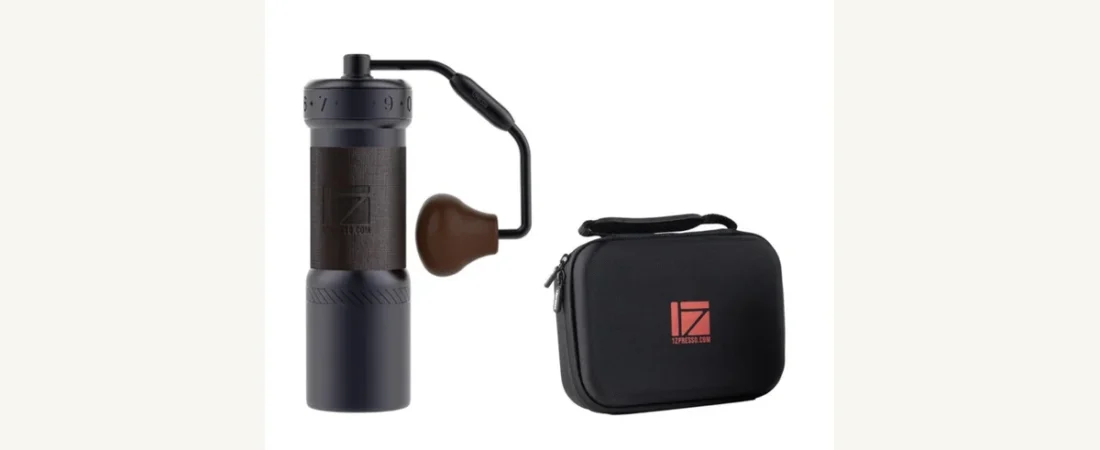
The best manual coffee grinder for most people in 2026 is the 1Zpresso K-Ultra: it pairs a large heptagonal conical burr with 20-micron external adjustment steps, which makes it one of the few hand grinders that moves cleanly between espresso and pour-over. If you want to spend less, the KINGrinder K6 delivers a 48 mm steel burr and finer 16-micron steps for roughly a third of the price, and the Timemore Chestnut C3S is the entry point we would point a first-time buyer toward.
A hand grinder is the cheapest way to get a genuinely good burr into your kitchen. You give up speed and convenience; in return you get burrs that would cost several times as much inside an electric grinder, near-silent operation, and something you can throw in a bag. The catch is that the category is crowded with near-identical aluminum tubes, and the specs that actually matter (burr size and geometry, adjustment resolution, bearing design, capacity) are often buried or contradicted between listings.
This guide sorts nine manual grinders by what the manufacturers publish, what their manuals say, and what owners report after months of use. Prices are US prices, checked in late November 2026, a period when many Amazon listings were running holiday discounts, so treat them as a snapshot rather than a promise.
Quick Verdict: The Best Manual Coffee Grinders at a Glance
| Grinder | Best for | Key spec | Approx. US price | Buy |
|---|---|---|---|---|
| 1Zpresso K-Ultra | Best overall (espresso to filter) | Heptagonal K burr, 20 µm/click | ~$207–$259 | Check Price |
| KINGrinder K6 | Best value | 48 mm steel burr, 16 µm/click | ~$93–$109 | Check Price |
| Timemore Chestnut C3S | Best budget | 38 mm S2C660 burr, dual bearing | ~$63–$89 | Check Price |
| Comandante C40 MK4 | Best premium filter grinder | Nitro Blade burr, sealed ball bearings | ~$265 | Check Price |
| 1Zpresso J-Ultra | Best for espresso | 8 µm adjustment steps | ~$159–$199 | Check Price |
| 1Zpresso ZP6 Special | Best for pour-over | 48 mm hexagonal burr, 22 µm/click | ~$209 | View at 1Zpresso |
| 1Zpresso Q Air | Best for travel | 365 g, 15–20 g capacity | ~$55–$69 | Check Price |
| Hario Skerton Pro | Best ceramic-burr budget pick | Ceramic conical burr, 100 g bowl | ~$55 | Check Price |
| Timemore Chestnut S3 | Best external dial under $160 | S2C890 burr, 15 µm/click external ring | ~$127–$159 | Check Price |
Price ranges show the lowest Amazon.com price we saw and the manufacturer’s own US price where one is published, around the time of writing (Nov 2026).
How We Researched This: Our 5-Pillar Research Methodology
How We Researched This
- OEM spec & manual verification: burr size and type, adjustment step, clicks per rotation, capacity and weight were taken from each manufacturer’s product page or printed manual. Where a spec appears only on retailer pages, we say so.
- SCA certification check: the Specialty Coffee Association’s Certified Home Brewer program covers brewers, not hand grinders, so none of these products carries an SCA mark. We did not hold that against them; we judged grind adjustment against the ranges SCA-style brewing methods require.
- Owner-review synthesis: we read owner reviews on manufacturer stores and Amazon and discussion on Reddit (r/Coffee, r/espresso, r/pourover) and Home-Barista, looking for repeated praise and repeated complaints rather than single anecdotes.
- Failure-mode & durability audit: bearings, handle attachment, catch-cup retention, burr calibration drift, and whether replacement parts and warranty support are available.
- 3-year cost of ownership: a manual grinder has no motor to fail, so cost is mostly purchase price plus the odds of needing a replacement part or a second grinder because the first can’t do what you need. Buying the right adjustment range up front is the biggest saving.
Caffro does not run a lab, and nothing below comes from hands-on testing. When we quote grind times or owner experiences, they are reports from owners, attributed as such.
#1 1Zpresso K-Ultra: Best Overall
Engineering Specs & Key Metrics Grid
| Spec | Manufacturer / listing data |
|---|---|
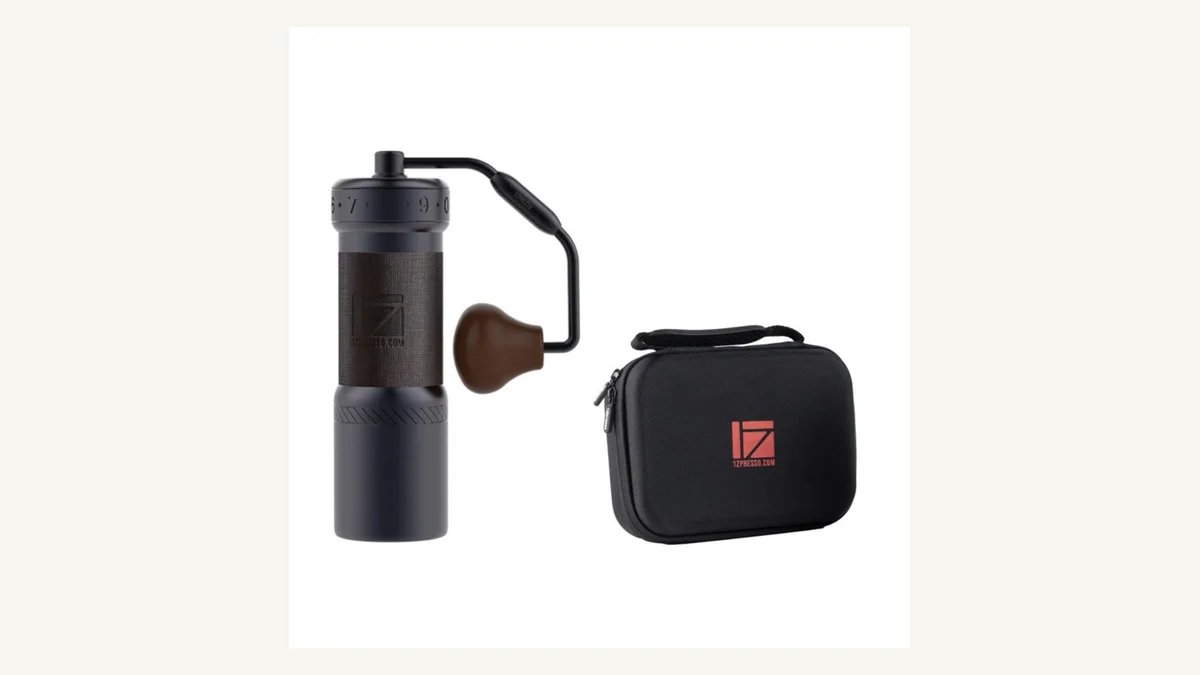
| Burr | Heptagonal conical K burr (stainless steel) |
| Adjustment | External dial, 20 µm per click, 100 clicks per rotation |
| Capacity | 35–40 g |
| Weight | 700 g |
| Catch cup | Magnetic |
| Handle | Foldable |
| Warranty | 1 year |
| Approx. US price | $259 at 1Zpresso (list $289); around $207 on Amazon at the time of writing (Nov 2026) |
Burr Architecture & Grind Analysis
The K-Ultra sits at the top of 1Zpresso’s K line, and its appeal is range. One hundred clicks per full rotation at 20 microns per click gives you a dial fine enough to make meaningful espresso adjustments and long enough to reach French press without counting multiple laps of the ring. That external, numbered dial is the feature most owners single out: you can read and return to a setting without opening the grinder.
The heptagonal conical burr is 1Zpresso’s larger K-series design. Larger conical burrs generally take more coffee per turn, which shows up in owner reports. One 1Zpresso customer reported grinding 18 g of medium-dark coffee in under a minute, and a Reddit r/pourover owner comparing a 10 g dose reported about 13 seconds on the K-Ultra versus about 21 seconds on a Comandante C40. Those are individual reports, not controlled measurements, but they line up with the burr-size logic.
Build details are sensible for a grinder at this price: a magnetic catch cup that pulls off without threading, a folding handle for storage, and 35–40 g of capacity, enough for a large pour-over or two espresso doses.
What We Liked vs. What We Didn’t
Pros
- Covers espresso through French press on one dial
- Numbered external adjustment is easy to read and repeat
- Owner reports put it among the faster hand grinders
- Magnetic cup and folding handle
Cons
- Expensive at full list price
- 1-year warranty is short for a premium tool
- One owner reported the handle knob coming loose
- 700 g is heavy for ultralight travel
Who Should NOT Buy This
- The pour-over-only drinker on a budget: you are paying for espresso range you will never use.
- The backpacker counting grams: 700 g is a lot to carry for a single cup.
Prefer something lighter or cheaper? Browse our manual grinder research.
#2 KINGrinder K6: Best Value
Engineering Specs & Key Metrics Grid
| Spec | Manufacturer / listing data |
|---|---|
| Burr | 48 mm heptagonal stainless steel conical |
| Adjustment | 16 µm per click, 60 clicks per rotation |
| Capacity | 30–35 g per Amazon listing (KINGrinder’s own store page says 25–30 g) |
| Weight | 630 g |
| Bearings | Dual bearing |
| Owner rating | 4.6 out of 5 from 1,085 Amazon ratings (at time of writing) |
| Approx. US price | List $109; around $93 on Amazon at the time of writing (Nov 2026) |
Burr Architecture & Grind Analysis
On paper, the K6 is the most hardware per dollar in this guide. A 48 mm heptagonal steel burr is the same size class as grinders costing twice as much, and its 16-micron adjustment step is actually finer than the K-Ultra’s. Sixty clicks per rotation means the dial travels more than one lap between espresso and filter, so you will need to note which turn you are on.
Dual bearings stabilize the shaft, which matters because burr wobble is what turns a good burr into an inconsistent one. Capacity is where listings disagree: the Amazon listing gives 30–35 g while KINGrinder’s own store page lists 25–30 g. We would plan around the lower figure.
The K6’s rating across more than a thousand Amazon reviews is a reassuring sign for a brand with less name recognition than 1Zpresso or Comandante. For most home brewers who want one grinder for both espresso and filter without paying premium prices, this is the pick.
What We Liked vs. What We Didn’t
Pros
- 48 mm steel burr at a budget price
- Fine 16 µm steps suit espresso dialing
- Strong Amazon rating across a large review count
- Dual bearings for shaft stability
Cons
- Capacity figures conflict between listings
- Multi-turn dial means tracking rotations
- Less established support network than the bigger brands
Who Should NOT Buy This
- The once-a-week brewer who wants simplicity: a cheaper single-turn grinder is easier to live with.
- The buyer who wants a long warranty and local service: premium brands have better-known support.
Want the simplest possible budget grinder? See our manual grinder hub.
#3 Timemore Chestnut C3S: Best Budget
Engineering Specs & Key Metrics Grid
| Spec | Manufacturer / listing data |
|---|---|
| Burr | 38 mm S2C660 stainless steel |
| Adjustment | Internal dial, about 83.3 µm per click (Timemore lists an espresso dial option at 23.3 µm) |
| Capacity | 20 g (30 g max) |
| Bearings | Dual bearing |
| Approx. US price | $89 at Timemore; around $63 on Amazon at the time of writing (Nov 2026) |
Burr Architecture & Grind Analysis
The C3S is Timemore’s refresh of the grinder that made “budget hand grinder” a respectable category. The 38 mm S2C660 burr is Timemore’s spike-to-cut design, built for filter coffee, and the dual bearing keeps it centered. For pour-over, AeroPress and French press, this is the least you can spend and still get a steel burr that is a real step up from a blade grinder.
The limitation is adjustment. At roughly 83 microns per click on the standard internal dial, each step is coarse, which is fine for filter brewing but too blunt for espresso. Timemore lists a separate espresso dial at 23.3 microns per click; if espresso is on your list at all, you are better served by the K6 or J-Ultra.
Capacity is 20 g as rated, 30 g at most, which covers a single large mug. Adjustment is internal, so you unscrew the catch cup and turn the dial under the burr, a small chore if you switch brew methods often.
What We Liked vs. What We Didn’t
Pros
- Lowest price for a steel burr from an established brand
- Dual bearing at this price
- Compact and easy to carry
Cons
- Coarse 83 µm steps are not suited to espresso
- Internal adjustment is slower to change
- 20 g rated capacity limits batch size
Who Should NOT Buy This
- The espresso beginner: the step size is too coarse to dial in shots.
- The household brewing 40 g+ at once: you will be refilling mid-grind.
Making espresso? Look at grinders built for it in our grinder research.
#4 Comandante C40 MK4: Best Premium Filter Grinder
Engineering Specs & Key Metrics Grid
| Spec | Manufacturer / listing data |
|---|---|
| Burr | Nitro Blade high-nitrogen steel (about 39 mm per retailers; not stated by Comandante) |
| Bearings | Two sealed stainless ball bearings |
| Capacity | 40 g jars |
| Settings (manual) | Espresso 7–13 clicks; pour-over 18–35 clicks |
| Adjustment | Internal dial (about 30 µm per click per retailers) |
| Approx. US price | Around $265 on Amazon at the time of writing (Nov 2026), sold by a third-party seller |
Burr Architecture & Grind Analysis
The C40 is the reference point most hand grinders are compared against. Comandante’s Nitro Blade burr uses high-nitrogen steel, and the grinder rides on two sealed stainless ball bearings. Comandante’s manual gives clear starting points: 7 to 13 clicks for espresso and 18 to 35 for pour-over.
Its weakness by modern standards is resolution. Retailers list roughly 30 microns per click, which is excellent for filter brewing but coarse for espresso unless you add an aftermarket fine-adjustment axle. Speed is also modest: the manual itself describes throughput as about one bean per turn, and the Reddit owner comparison mentioned above found the C40 slower than the K-Ultra for the same dose.
Buy carefully. Comandante publicly warns about counterfeit products and unauthorized dealers, and the Amazon listing we found was fulfilled by a third-party seller. Check the seller, or buy from an authorized US dealer.
What We Liked vs. What We Didn’t
Pros
- Benchmark filter grinder with a long track record
- Sealed stainless ball bearings
- 40 g capacity
- Clear brew-method settings in the manual
Cons
- Coarse steps for espresso without an upgrade
- Slower than larger-burr rivals per owner reports
- Counterfeit risk on marketplaces
- Premium price
Who Should NOT Buy This
- The espresso-first buyer: the J-Ultra or K-Ultra gives finer steps out of the box.
- The impatient morning grinder: larger-burr models finish faster.
Prefer a faster premium option? Explore our manual grinder research.
#5 1Zpresso J-Ultra: Best for Espresso
Engineering Specs & Key Metrics Grid
| Spec | Manufacturer / listing data |
|---|---|
| Adjustment | 8 µm steps (external) |
| Capacity | 35–40 g |
| Weight | 700 g |
| Catch cup | Magnetic |
| Approx. US price | $199 at 1Zpresso; around $159 on Amazon at the time of writing (Nov 2026) |
Burr Architecture & Grind Analysis
The J-Ultra is the specialist. Its 8-micron adjustment steps are the finest in this guide, which is what espresso demands: the difference between a shot that gushes and one that chokes can be a few microns. If you pull shots daily and want a hand grinder that dials in like a good electric espresso grinder, this is the one built for that job.
It shares the K-Ultra’s 35–40 g capacity, 700 g weight and magnetic catch cup. The trade-off for such fine steps is that coarse settings take a lot of dial travel, so it is less convenient if you bounce between espresso and French press every day.
One recurring owner note on 1Zpresso’s store: the magnetic cup can shift if bumped. It is a minor complaint, but worth knowing if you grind directly into a portafilter funnel.
What We Liked vs. What We Didn’t
Pros
- Finest adjustment steps in this guide
- Built for espresso dialing
- Generous 35–40 g capacity
- Cheaper than the K-Ultra
Cons
- Lots of dial travel for coarse brews
- Magnetic cup can shift per owners
- Heavy for travel
Who Should NOT Buy This
- The pour-over and French press drinker: you will crank through dial range you don’t need.
- The traveler: the Q Air is far lighter.
Not an espresso drinker? See filter-focused picks in our pour-over research.
#6 1Zpresso ZP6 Special: Best for Pour-Over
Engineering Specs & Key Metrics Grid
| Spec | Manufacturer / listing data |
|---|---|
| Burr | 48 mm hexagonal |
| Adjustment | 22 µm per click, 90 clicks |
| Capacity | 30–35 g |
| Weight | 700 g |
| Approx. US price | $209 at 1Zpresso (no verified Amazon.com listing at the time of writing) |
Burr Architecture & Grind Analysis
The ZP6 Special is 1Zpresso’s filter-focused design. Its 48 mm hexagonal burr is aimed at clarity in pour-over rather than espresso body, and 90 clicks at 22 microns each give plenty of resolution in the filter range.
Owner reports on 1Zpresso’s store place its speed between the Comandante (slower) and Timemore’s C2 (faster). One owner reported that the burrs were locked at zero on arrival and needed recalibration, a reminder to check zero point before your first brew.
We could not find a verified Amazon.com listing for the ZP6 Special, so our link goes to 1Zpresso’s own product page.
What We Liked vs. What We Didn’t
Pros
- Burr designed for pour-over clarity
- Fine 22 µm steps across 90 clicks
- Large 48 mm burr
Cons
- Not intended for espresso
- One owner reported a calibration issue out of the box
- Harder to find at US retailers
Who Should NOT Buy This
- The espresso drinker: this burr is tuned for filter.
- The buyer who wants Amazon returns: it is mainly sold direct.
Need one grinder for everything? See our grinder research.
#7 1Zpresso Q Air: Best for Travel
Engineering Specs & Key Metrics Grid
| Spec | Manufacturer / listing data |
|---|---|
| Weight | 365 g |
| Capacity | 15–20 g |
| Adjustment | 25 µm per click, 30 clicks |
| Bearings | Dual bearing |
| Approx. US price | $69 at 1Zpresso; around $55 on Amazon at the time of writing (Nov 2026) |
Burr Architecture & Grind Analysis
At 365 g, the Q Air weighs about half as much as the full-size grinders here, which is the whole point. Its 15–20 g capacity suits a single AeroPress or pour-over, and a dual bearing at this price is a welcome detail.
Thirty clicks at 25 microns each is a short dial. It reaches a useful filter range, but there is little room for fine tuning. One owner noted that 1Zpresso’s published grind settings did not match newer production batches, so expect to dial in by taste rather than by chart.
Think of the Q Air as a second grinder for trips or the office, or a first grinder for someone who brews one cup and doesn’t want to spend much.
What We Liked vs. What We Didn’t
Pros
- Very light at 365 g
- Dual bearing at a low price
- Small enough for a travel kit
Cons
- 15–20 g capacity is one cup
- Short 30-click dial
- Published settings may not match newer units
Who Should NOT Buy This
- The two-cup household: you will grind twice every morning.
- The espresso enthusiast: steps and range are too limited.
Brewing on the road? Browse our AeroPress research.
#8 Hario Skerton Pro: Best Ceramic-Burr Budget Pick
Engineering Specs & Key Metrics Grid
| Spec | Manufacturer / listing data |
|---|---|
| Burr | Ceramic conical |
| Capacity | 100 g grounds capacity (glass bowl) |
| Dimensions | 167 × 95 × 195 mm |
| Weight | 649 g (Amazon listing) |
| Handle | Detachable |
| Owner reviews | 2,268 Amazon ratings at the time of writing |
| Approx. US price | Around $55 on Amazon at the time of writing (Nov 2026) |
Burr Architecture & Grind Analysis
The Skerton Pro is the odd one out: ceramic burrs instead of steel, and a heat-proof glass bowl (made in Japan, per Hario’s listing) that holds 100 g of grounds. That large bowl makes it the best option here for grinding a full pot’s worth at once, as long as you are patient.
Hario describes the Pro as an update to the original Skerton with easier-to-adjust burr settings. Ceramic burrs don’t rust and are hard-wearing, but they are generally regarded as less precise than modern steel burrs, especially at the coarse end, so this grinder is best for drip, pour-over and AeroPress rather than French press or espresso.
With more than 2,000 Amazon ratings, it is one of the most widely owned hand grinders in the US.
What We Liked vs. What We Didn’t
Pros
- Large 100 g grounds capacity
- Ceramic burrs won’t rust
- Detachable handle for storage
- Widely available
Cons
- Ceramic burrs are less precise than modern steel designs
- Glass bowl is breakable
- Bulky for travel
Who Should NOT Buy This
- The French press fan: steel-burr grinders handle coarse settings more evenly.
- The espresso drinker: it isn’t built for espresso-fine grinding.
Want steel burrs at a similar price? See the Q Air above or our manual grinder hub.
#9 Timemore Chestnut S3: Best External Dial Under $160
Engineering Specs & Key Metrics Grid
| Spec | Manufacturer / listing data |
|---|---|
| Burr | S2C890 stainless steel (42 mm per retailers) |
| Adjustment | External ring, 0.015 mm (15 µm) per click |
| Factory burr gap at zero | 0.075 mm |
| Settings (Timemore) | Espresso 1–15, moka 5–20, pour-over 50–80, French press 80–90 clicks |
| Capacity | No more than 30 g per load (manual) |
| Build | All-metal body, pull-to-fold handle, silicone base |
| Approx. US price | $159 at Timemore; around $127 on Amazon at the time of writing (Nov 2026) |
Burr Architecture & Grind Analysis
The S3 is Timemore’s first grinder with an external adjustment ring, and it brings the C-series a long way toward premium territory. The S2C890 burr is designed, per Timemore, to reduce fines in the 200–250 µm range for improved body and sweetness, and the 15-micron external steps are fine enough for espresso.
Timemore publishes a full settings range, from 1–15 clicks for espresso to 80–90 for French press, and states that each unit leaves the factory with a 0.075 mm burr gap at zero. The company’s own note warns that pressing down on the handle can shift the shaft slightly and cause minor burr rub, which is worth knowing.
Owner feedback on Timemore’s store praises easy adjustment and a fairly neutral cup, with one owner asking for a lockable dial because it is easy to knock while grinding. One owner reported fitting about 26 g of medium-roast beans.
What We Liked vs. What We Didn’t
Pros
- External 15 µm dial for espresso and filter
- Clear published settings for every brew method
- All-metal build with folding handle
- Cheaper than 1Zpresso’s external-dial grinders
Cons
- Dial can be knocked off setting while grinding
- Capacity around 30 g max
- Pressing on the handle can cause burr rub (per Timemore)
Who Should NOT Buy This
- The buyer brewing 35–40 g batches: the K-Ultra holds more.
- The budget filter-only drinker: the C3S does filter for half the price.
Comparing brands? Start with our comparison research.
Comprehensive Buyer’s Guide & Decision Matrix
Choosing a manual coffee grinder comes down to three questions: what you brew, how much you brew at a time, and whether the grinder will leave the house.
Primary Feature Evaluation Metrics
- Burr size and material: larger conical burrs (around 48 mm) generally grind faster than smaller ones (around 38 mm). Hardened steel is the norm; ceramic (Hario) resists rust but is generally regarded as less precise.
- Adjustment step: this is the spec that decides espresso. Steps of roughly 8–20 µm (J-Ultra, K6, S3, K-Ultra) allow espresso dialing; 25 µm and coarser (Q Air, C40 stock, C3S standard) are best for filter.
- External vs. internal dial: external numbered dials (K-Ultra, J-Ultra, S3) let you switch brew methods in seconds. Internal dials (C3S, C40) mean removing the catch cup and counting clicks from zero.
- Bearings: dual or sealed ball bearings keep the shaft centered, which reduces wobble and inconsistency. Every steel-burr grinder here uses some form of dual bearing.
- Capacity: 15–20 g is a single cup; 30–40 g is a large pour-over or two espresso doses; Hario’s 100 g bowl is for full pots.
- Weight: 365 g (Q Air) travels; 630–700 g grinders feel solid but add bulk.
| If you mainly brew… | Choose | Why |
|---|---|---|
| Espresso every day | 1Zpresso J-Ultra | Finest steps (8 µm) in this guide |
| Espresso and filter, best overall | 1Zpresso K-Ultra | 20 µm external dial, 100 clicks per rotation |
| Espresso and filter on a budget | KINGrinder K6 | 48 mm burr and 16 µm steps around $100 |
| Pour-over only, premium | 1Zpresso ZP6 Special or Comandante C40 | Filter-tuned burrs |
| Pour-over and AeroPress, cheap | Timemore C3S | Steel burr from an established brand at the lowest price |
| One cup while traveling | 1Zpresso Q Air | 365 g |
| Big batches for drip | Hario Skerton Pro | 100 g grounds capacity |
| Mixed methods, mid-range | Timemore S3 | External 15 µm dial with published settings |
Maintenance & Longevity Factors
Manual grinders have no motor or electronics, which is why they tend to outlast electric grinders at the same price. The parts that do wear are bearings, handle joints and, eventually, burrs. Brush the burrs out regularly, avoid washing steel burrs with water unless the manual allows it, and grind a few beans before brewing after cleaning.
Calibration drift is the most common owner complaint across brands: burrs that arrive set slightly off zero, or published settings that don’t match a new production batch. Find your grinder’s true zero (the point where the burrs just touch) before your first brew and count from there.
For three-year cost of ownership, the biggest expense is buying twice. A cheap filter-only grinder is a false economy if you will want espresso within a year; an espresso specialist is wasted money if you only brew pour-over. Warranties are short across the category (1Zpresso lists one year on the K-Ultra), so buy from authorized sellers, particularly for Comandante, which warns about counterfeits.
Frequently Asked Questions
What is the best manual coffee grinder in 2026?
Based on manufacturer specs and owner feedback, the 1Zpresso K-Ultra is the best manual coffee grinder for most people, because its 20 µm external dial covers espresso through French press. The KINGrinder K6 is the best value and the Timemore Chestnut C3S is the best budget option.
Is a manual coffee grinder better than an electric one?
At the same price, a manual grinder usually has a better burr and adjustment system because there is no motor to pay for. The trade-off is effort and time: each dose takes manual cranking, which suits one or two cups a day better than large batches.
Can a manual grinder grind fine enough for espresso?
Yes, if the adjustment steps are fine enough. Grinders with roughly 8–20 µm steps, such as the 1Zpresso J-Ultra, KINGrinder K6, Timemore S3 and 1Zpresso K-Ultra, are designed to reach espresso fineness. Coarser-stepped grinders like the Timemore C3S are better suited to filter coffee.
Are ceramic or steel burrs better in a hand grinder?
Steel burrs are standard on modern hand grinders and are generally regarded as more precise. Ceramic burrs, as on the Hario Skerton Pro, don’t rust and wear slowly, but they are less precise, particularly at coarse settings.
How much coffee can a manual grinder hold?
Most full-size hand grinders hold 30–40 g of beans, enough for a large pour-over or two espresso doses. Travel models like the 1Zpresso Q Air hold 15–20 g, while the Hario Skerton Pro’s glass bowl holds 100 g of grounds.
Editorial Research Disclosure
This article is based on manufacturer specifications, published manuals, retailer data and aggregated owner feedback. Caffro did not perform hands-on lab testing of these products.
About the Caffro Research Team: Caffro’s researchers compare coffee equipment by reading manufacturer documentation, retailer listings and thousands of words of owner discussion so you don’t have to. We publish transparent, research-based buying guides and update them as prices and products change. Learn more about Caffro.