
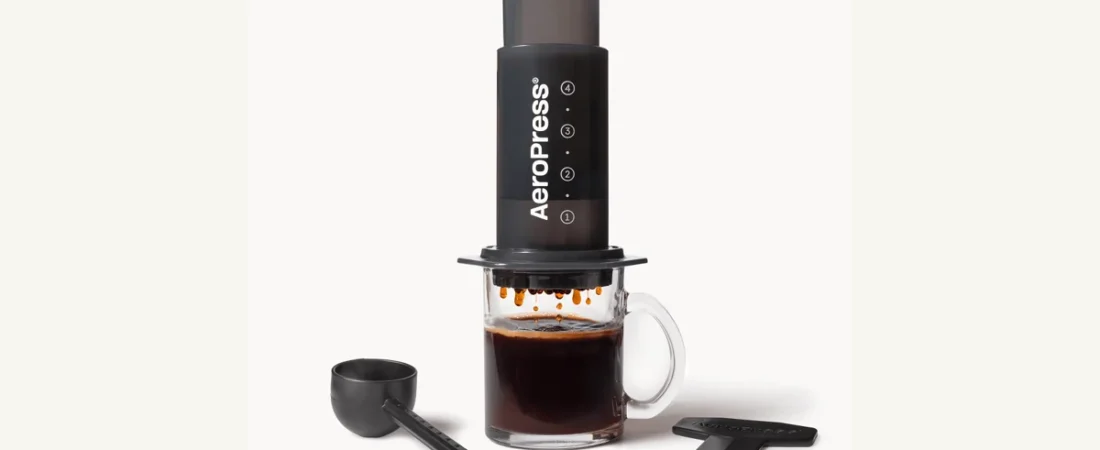
The French press vs AeroPress question comes up because both brewers are cheap, manual and fully immersive: grounds sit in hot water, then you push a plunger. That is where the similarity ends. A French press is a batch brewer that filters through metal mesh and serves several people at once. An AeroPress is a single-mug brewer that pushes coffee through a paper filter under hand pressure, then pops out a puck of grounds for cleanup.
We compared the best-selling examples of each, the AeroPress Original and the Bodum Chambord 34 oz, plus the Espro P3 as a French press alternative, using manufacturer specs and manuals, US retail listings and thousands of owner reviews. Caffro did not brew with these products; everything below comes from published data and owner reports.
Caffro is reader-supported. When you buy through links on our site, we may earn an affiliate commission at no extra cost to you. Read our affiliate disclosure.
Executive Verdict
Choose the AeroPress if you brew for one or two, want paper-filtered coffee, travel, or hate cleaning a carafe. It is lighter, harder to break, dishwasher safe and around $30 on Amazon.
Choose a French press if you regularly brew three or more cups at once, want an oil-rich unfiltered brew, or prefer a set-and-wait method with no pressing technique. The Bodum Chambord is the classic pick; the Espro P3 adds a finer double filter for less sediment.
Overall for most solo drinkers: AeroPress. It wins on durability, cleanup and versatility in the data we reviewed. For households and hosts, a French press is the better tool.
How We Researched This
We scored nothing in a lab. Instead we weighed five factors for each brewer:
- OEM spec and manual verification: capacity, materials, dimensions, warranty and official brew recipes from AeroPress, Bodum and Espro.
- SCA certification check: neither manual immersion brewer falls under the SCA Certified Home Brewer program, which covers automatic machines, so this factor is neutral here.
- Owner-review synthesis: Amazon review summaries plus discussion on Reddit (r/Coffee) and Home-Barista.
- Failure-mode and durability audit: what breaks, what wears out, and whether spare parts are sold.
- 3-year cost of ownership: purchase price plus likely replacement parts and consumables.
Side-by-Side Spec Matrix
| Spec | AeroPress Original | Bodum Chambord 34 oz | Espro P3 32 oz |
|---|---|---|---|
| Brew method | Immersion + hand pressure through paper filter | Immersion, metal mesh plunger | Immersion, double micro-filter (paper-filter compatible) |
| Capacity | 10 oz (1–2 cups) | 34 oz | 32 oz (min. 24 oz brew) |
| Main material | Polypropylene | Borosilicate glass, chrome-plated steel frame | Plastic body, stainless filter |
| Size | 5.25 in H x 4.2 in W (maker) | 17 x 24.5 x 10.7 cm | 6.1 x 4.3 x 9.51 in |
| Official brew time | 30–60 s steep, then press | 4 min | 4 min |
| Amazon rating (at time of writing) | 4.7★ (28,698 ratings) | 4.6★ (28,822 ratings) | 4.2★ (3,330 ratings) |
| Approx. US price (Nov 2026) | around $29.96 Check Price | around $39.69 Check Price | around $24.99 deal Check Price |
Prices are Amazon.com prices at the time of writing (November 2026) and change often. AeroPress lists the Original at $39.95 on its own site. Bodum lists the Chambord 34 oz at $54.99, out of stock when we checked. Espro lists the P3 32 oz at $39.99.
Dimension 1: Extraction and Filtration
Both brewers are immersion brewers, so every ground spends the full brew time in the water. The difference is how the coffee leaves the grounds.
French press: metal mesh, longer steep
Bodum’s instructions for the Chambord call for coarse grounds, one rounded scoop per 4 oz of water, water at 92–96°C (about 198–205°F) and a four-minute steep before you press the plunger. The metal mesh lets coffee oils and very fine particles pass into the cup. That is why French press coffee is usually described as heavier-bodied, and why owners often mention a layer of sediment at the bottom of the last cup.
The Espro P3 keeps the same four-minute method (Espro’s own instruction is simply “wait four minutes, press”) but uses a double micro-filter and also accepts paper filters, a design aimed squarely at reducing that sediment.
AeroPress: paper filter, short steep, gentle pressure
AeroPress’s official recipe uses 16–18 g of coffee, water at 185°F, a fill to the number 4, a three-second stir, then a wait of 30 seconds for fresh medium-fine grounds or 60 seconds for pre-ground coffee. You then press until you hear a hiss. The short contact time is offset by the finer grind and the pressure of the press.
Because the coffee passes through a paper micro-filter, the cup is clearer and carries far less oil and sediment than a French press. The maker strongly discourages the popular “inverted” method, and warns against pressing into thin glass mugs. It lists compatible mug openings of roughly 67–95 mm inner diameter.
Why the filter matters beyond the cup
Coffee oils contain cafestol and kahweol, compounds linked to raised LDL cholesterol. In a six-month randomised trial published in the BMJ, volunteers drinking 0.9 litres a day of strong cafetière (French press) coffee took in about 38 mg of cafestol daily, versus under 1 mg for filtered coffee, and their LDL cholesterol rose 9–14% compared with the filtered group. The authors note these compounds do not pass through paper filters. This is a heavy-intake study, not a reason to panic over one cup, but if cholesterol is a concern for you, paper filtration is a point in the AeroPress’s favour.
Edge: AeroPress for a cleaner, paper-filtered cup and filtration control. French press for anyone who specifically wants an unfiltered, full-oil brew.
Dimension 2: Workflow, Noise and Daily Usability
Neither brewer uses electricity, so both are silent apart from your kettle. The real differences are batch size and hands-on time.
- Batch size: the Chambord makes 34 oz in one go, enough for a table. The AeroPress Original’s 10 oz chamber makes one to two cups, so serving four means brewing several rounds. The AeroPress Original XL doubles that to 20 oz.
- Hands-on time: AeroPress says preparation and cleanup take under two minutes. A French press takes four minutes of steeping, but that time is hands-off.
- Technique: a French press is almost foolproof: add coffee and water, wait, press. The AeroPress rewards experimentation with grind, time and dose, which many owners on r/Coffee enjoy and some beginners find fiddly.
- Serving: the Chambord pours like a carafe. The AeroPress presses straight into a single sturdy mug, which must fit its 67–95 mm guidance.
- Portability: at 7.75 oz and made of plastic, the AeroPress is a common travel brewer. The AeroPress Go packs into its own 8 oz cup with a lid. A glass French press is a poor travel companion.
Edge: French press for groups and low-effort batches. AeroPress for speed, travel and single servings.
Dimension 3: Build Quality, Maintenance and Repairability
This is where owner data separates the two most clearly.
Cleaning
In Amazon’s review summaries, cleaning is one of the AeroPress’s most-praised traits: of 2,316 mentions, 2,250 were positive and 66 negative. You press the spent puck into the bin, rinse, and the parts are top-rack dishwasher safe. The Chambord drew 763 cleaning mentions, 652 positive and 111 negative, with owners noting that wet grounds have to be scooped or rinsed out of the beaker. The Espro P3 is more mixed (181 mentions, 120 positive, 61 negative), largely because its filters must be separated and washed after every use.
Durability
Durability is the Chambord’s weak spot. Of 1,067 durability mentions in its Amazon review summary, 648 were negative, mostly about the glass beaker breaking. The AeroPress’s polypropylene body avoids that problem. Its main wear item is the rubber seal on the plunger. AeroPress acknowledges the seal “does wear down over time,” and at least one owner reported it loosening after about a year.
Spare parts
- AeroPress: replacement seal $9.95; paper filters $9.95 per pack (AeroPress site).
- Bodum Chambord: spare glass beaker $14.99; replacement filter plate $9.99 (Bodum site).
- Espro P3: replacement filters $19.99 (18 oz) or $21.99 (32 oz). Espro notes they do not fit presses made before January 2020.
3-year cost of ownership
Over three years, a careful French press owner may pay only the purchase price. One broken beaker adds $14.99, which owner data suggests is a real possibility. An AeroPress owner should budget for a $9.95 seal and an ongoing supply of paper filters at $9.95 per pack. Both brewers remain inexpensive to own; neither needs descaling or electricity.
Edge: AeroPress for durability and easy cleaning. French press parts are cheap, but you are more likely to need them.
AeroPress Original Deep Dive: Advantages and Drawbacks
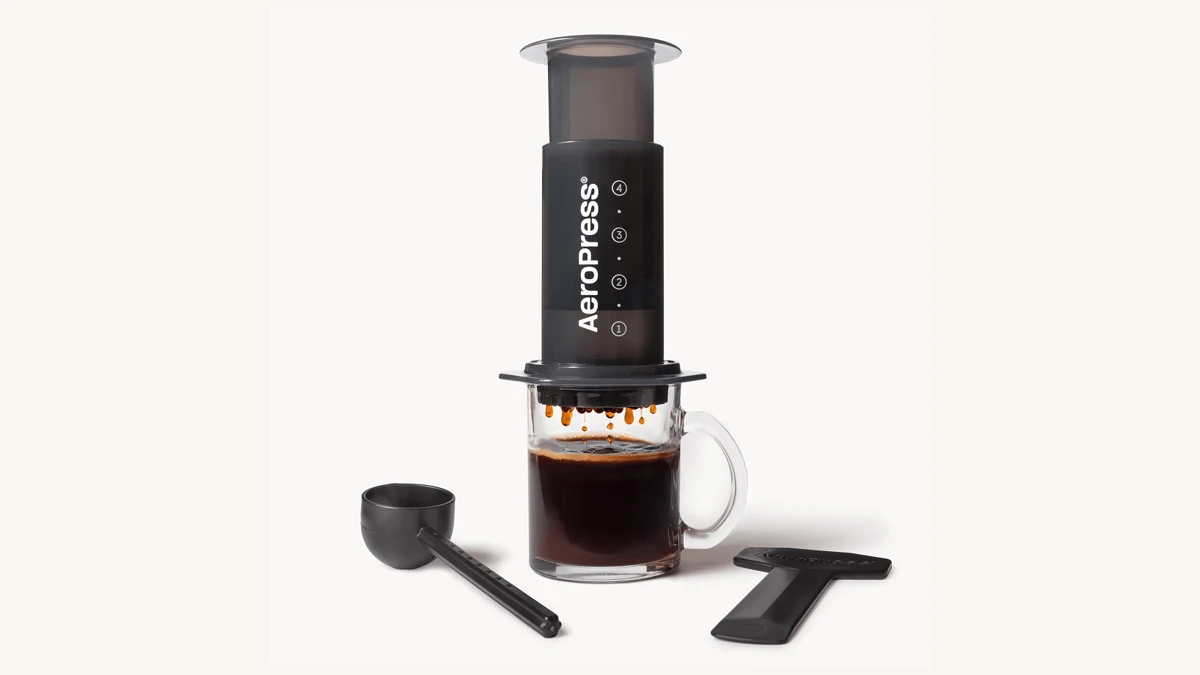
The AeroPress Original has been the default single-cup manual brewer for years, and its Amazon listing carries a 4.7-star average across 28,698 ratings. It is around $29.96 on Amazon at the time of writing (list $39.95). If you want a see-through version, the AeroPress Clear is made of Tritan and was around $37.46 (list $49.95). For bigger batches, the AeroPress Original XL holds 20 oz and was around $59.95 (list $79.95). The travel-focused AeroPress Go lists at $49.95 on AeroPress’s site.
Pros
- Paper filtration gives a clean, low-sediment cup
- Brew and clean up in under two minutes (maker claim)
- Light, shatter-resistant and travel friendly
- Top-rack dishwasher safe
- Warranty extends from 1 to 2 years if registered
- Cheap replacement seal sold by the maker
Cons
- Only 10 oz per brew, 1–2 cups
- Needs a sturdy mug of the right size
- Ongoing cost of paper filters
- Rubber seal wears over time
- More variables to learn than a French press
Who Should NOT Buy This
- The weekend host who pours coffee for four or more at once. Repeated rounds get tedious.
- The set-and-forget brewer who wants no technique at all and enjoys a heavy, oily cup.
Better fit: browse our French press coverage.
Bodum Chambord French Press Deep Dive: Advantages and Drawbacks
The Bodum Chambord 34 oz is the classic French press design: a borosilicate glass beaker in a chrome-plated steel frame. It holds a 4.6-star average across 28,822 Amazon ratings and was around $39.69 on Amazon at the time of writing. Bodum’s own site lists it at $54.99, but it was out of stock there when we checked.
If glass breakage or sediment worries you, the Espro P3 32 oz is a lower-risk French press option: its double micro-filter accepts paper filters, and it was on a deal at around $24.99 (list $39.94). Note its minimum brew volume of 24 oz and the extra filter washing. Espro’s double-wall stainless P7 (18 oz $119.99, 32 oz $149.99 on Espro’s site) solves breakage entirely but is not stovetop safe.
Pros
- 34 oz batch serves a group in one brew
- Simple, forgiving, hands-off method
- Unfiltered brew keeps coffee oils (if you want them)
- Glass lets you watch the brew
- Spare beaker and filter plate are inexpensive
Cons
- Glass beaker is the top owner complaint
- Sediment in the cup is common
- Wet grounds are messier to clean out
- Four-minute wait
- Unfiltered coffee carries cafestol
Who Should NOT Buy This
- The solo commuter or traveller who makes one mug and needs something packable and hard to break.
- The sediment-averse drinker who wants a clean, paper-filtered cup or is watching cholesterol.
Better fit: browse our AeroPress coverage.
Final Recommendation Matrix: Which Should You Buy?
| If this sounds like you | Pick | Why |
|---|---|---|
| You brew for 1–2 people | AeroPress Original | 10 oz chamber, under two minutes start to finish |
| You brew for 3+ people at once | Bodum Chambord 34 oz | One 34 oz batch |
| You travel or camp | AeroPress (or AeroPress Go) | Plastic, light, Go packs into its own cup |
| You want minimal sediment from a press | Espro P3 or AeroPress | Double micro-filter / paper filter |
| You keep breaking glass | AeroPress or Espro P7 | Polypropylene / stainless steel |
| You are watching cholesterol | AeroPress | Paper filter holds back cafestol |
| You want the cheapest way in | AeroPress Original or Espro P3 deal | Around $25–$30 at the time of writing |
Still deciding between other brewers? See all our head-to-head comparisons, or browse the AeroPress and French press hubs.
French Press vs AeroPress: FAQs
Is an AeroPress better than a French press?
Neither is better for everyone. Based on manufacturer specs and owner feedback, the AeroPress suits one or two drinkers who want quick, paper-filtered coffee and easy cleanup, while a French press suits anyone brewing three or more cups at once and who prefers an unfiltered, oil-rich brew.
Which makes more coffee, a French press or an AeroPress?
A French press, by a wide margin. The Bodum Chambord we compare holds 34 oz, while the AeroPress Original chamber is rated at 10 oz (one to two cups). Even the AeroPress Original XL tops out at 20 oz.
Is French press coffee bad for cholesterol?
Unfiltered coffee contains the compounds cafestol and kahweol. In a six-month BMJ trial, people drinking about 0.9 litres a day of strong cafetière coffee saw LDL cholesterol rise by 9 to 14% compared with filtered coffee drinkers. Paper filters, like the AeroPress uses, hold these compounds back. If you have a cholesterol concern, ask your doctor.
Can you put an AeroPress in the dishwasher?
Yes. AeroPress lists the Original as top-rack dishwasher safe. Most owners simply rinse it after pressing the puck into the bin.
How long do you steep a French press vs an AeroPress?
Bodum recommends a four-minute steep for the Chambord. AeroPress’s official recipe calls for a stir, then a wait of 30 seconds for fresh medium-fine grounds or 60 seconds for pre-ground coffee, before pressing.
Which is more durable?
Owner feedback points to the AeroPress. In Amazon review summaries, most durability complaints about the Chambord are about the glass beaker breaking. The AeroPress’s main wear part is its rubber seal, which AeroPress sells as a $9.95 replacement.
Research disclosure: This article is based on manufacturer specifications, published manuals, retailer data and aggregated owner feedback. Caffro did not perform hands-on lab testing of these products.
About the Caffro Research Team: Our editors research coffee equipment by verifying manufacturer specs and manuals, checking certifications, and reading thousands of owner reviews so you can choose with confidence. Learn more about Caffro.